.png)
Klara and the Sun
When Sony Pictures unveiled the official trailer for Klara and the Sun, it immediately established itself as one of the most vital and anticipated cinematic events of the year. Based on Kazuo Ishiguro’s universally acclaimed novel, the footage reveals a film that looks set to be an extraordinarily moving, visually arresting, and deeply philosophical exploration of what it truly means to love, to look after someone, and to be human.
The trailer introduces us to Klara, an "Artificial Friend" or A.F., an older model robot designed to provide companionship to lonely children. Set in a world where these androids are gradually losing their novelty, Klara spends her days in a shop window, looking up at the sky and praying to the "Glorious Sun" to give her a fighting chance at finding a home. Her prayers are answered when she is chosen by Josie, a young girl who sees a unique spark in the outdated robot, even if her pragmatic mother is largely swayed by the fact that Klara is a special model on a twenty percent discount.
What makes us incredibly excited about this adaptation is the beautifully balanced tone struck by the preview. On one level, Klara begins her journey with the innocence of a toddler, soaking up the world around her, learning from her humans, and asking simple, childlike questions about where the sun lives. Yet, beneath this pastel-hued innocence lies a creeping, melancholic dread. The reality of Klara's existence is starkly laid bare by the world around her: humans ask an immense amount of their artificial companions, and the family’s matriarch coldly reminds her that she is strictly under a trial warranty. One mistake, and she faces being sent back to the factory to be melted down into parts for the next generation.
Visually, the film looks absolutely stunning, capturing a distinct, slightly heightened reality where the warmth of natural sunlight clashes beautifully with the cold, sterile interiors of a fractured household. There are hints of secrets locked away in Josie's home—things the mother warns are none of Klara’s concern—suggesting a deeply emotional mystery at the heart of the narrative. As Josie’s well-being comes into question, Klara sets off on a poignant, singular mission to seek answers from the Sun itself, desperately trying to find a way to heal the family and save them from a creeping darkness.
This first look gives us immense confidence. It promises to be a film that avoids standard sci-fi tropes of robotic rebellion, choosing instead to focus on the quiet tragedy of a machine capable of a devotion that might outlast the very humans she was built to serve. Klara and the Sun looks like a heart-wrenching, beautifully acted triumph that will linger in the mind long after the curtains close.


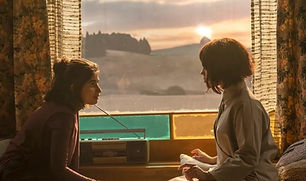

Power Ballad
What has us incredibly excited about Power Ballad is the dynamic friction between its two leads. Paul Rudd seems perfectly cast as the rugged, everyday musician who just wanted a shot at the big time, acknowledging with a heavy heart that having his name on a song of that magnitude would have completely changed his life.

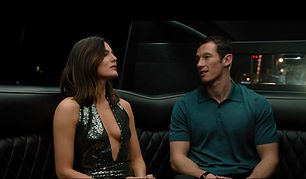


Dune: Part Three
Picking up roughly seventeen years after the seismic events of Part Two, the trailer immediately signals a shift in tone. While the first film was an act of world-building and the second a visceral war epic, Dune: Part Three—an adaptation of Frank Herbert’s Dune Messiah—looks to be a far more claustrophobic and tense affair.


