.png)
Search Results
Search this site
5322 results found with an empty search
- AYKA film review
★★★★★ Directed by: #SergeiDvortsevoy Written by: #SergeiDvortsevoy, #GennadiyOstrovskiy Starring: #SamalYeslyamova, #ZhiparaAbdilaeva, #SergeyMazur, et al. Film Review written by: Amber Jackson To close Kazakhstan Film Week in London, The Embassy of Kazakhstan in London brought audiences to Ayka, a 2018 film that follows a young woman struggling as a migrant in Moscow as she tries to support herself and her new-born child. Ayka explores a critical side to humanity, where characters are simultaneously problematic and petrified, as they fight to survive perilous conditions. Received well at Cannes Film Festival last year, having been selected for the Palme d’Or, lead Samal Yeslyamova received the award for best actress for her portrayal of Ayka. The acting skill and overwhelming effort that she gave in her portrayal of the character was extraordinary, with her subtle, yet jarring, movements indicating a woman who does not want to be seen. Every line she spoke felt real, catering to the illusion that the film is non-fiction and about a real woman. The narrative structure is simple, beginning and ending with no build-up or explanation. Director Sergei Dvortsevoy uses his background in documentary-making to style a film that provides a snapshot of Ayka’s existence for the audience to follow her throughout her life with no explanation. Small parts of information as to who she is are sprinkled throughout the film; we discover that she is an undocumented immigrant fighting to earn money and that she is in debt to someone. Her story is only able to be guessed as she makes her way through the Moscow that she has come to know and even then, everything always seems unfamiliar and unrecognisable. This is Moscow as the western world has never seen it. Provided is an explicit insight into an underground world. How each background character describes the city is entirely different to what the audience is shown. Wealthy characters infringe upon the edges of the screen, informing Ayka’s world, but the audience never really gets a good glimpse of the Moscow that is known internationally. The protagonist is left outside of this in a bleak reality that in fact many migrants experience – something that mainstream film very rarely discusses. Harsh and snowy conditions prevail in the cinematography of this piece, with director of photography Jolanta Dylewska placing focus on the grim and grotesque to paint an unsightly image of a frozen city. Everything appears dirty, animals are given extended camera time along with greater sympathy than the human characters, and each scene has dingy lighting to convey bleak surroundings. Another aspect of the camerawork that was incredibly clever was that those watching never get a full shot of Ayka’s face. The camera is always looking at Yeslyamova from the side, or uses a tight close up shot, which aids the audience’s speculation over her identity. Each character is completely undone and unromanticised, which is reflected in the simplicity of their costume and make-up. Counteracting this, the wealthier characters are excessive and over-glamourized, with expensive coats and cars to illustrate an incredible class divide. To follow this, a lack of music or score makes the film appear even more real, as though the audience is watching real lives unfold. The simplicity of hearing Yeslyamova’s intense breathing as her feet crunch up the snow beneath her, along with crying babies and animals throughout the film, convey a baseness of human existence that is incredibly thought-provoking and emotive. What is fascinating about Dvortsevoy’s vision is that the audience are completely immersed witnessing the brutality and hardship that Ayka endures, to the point of feeling intrusive. During the discussion after the screening, there was debate over if the film can be seen as Feminist. Dvortsevoy noted that he is happy for the film to be perceived in this way, as it is important to have a film that reads many ways. It was great to see a female perspective, with Samal Yeslyamova commenting on the difficulty, but also the importance, of portraying a character undergo such challenges. Indeed, it is these uncomfortable films that are the most important to watch, as they suggest issues that are the most overlooked or neglected. Ayka itself suggests many things to think about – is it a commentary on migrant conditions in the east? Is it simply a snapshot of a woman’s struggle to make a life for herself when she has nothing? Does her pain stem from patriarchal persecution? Dvortsevoy’s direction allows us to make our own assessment as an audience member, inviting us to simply watch Ayka survive. Ayka was selected as the Kazakhstani entry for Best Foreign Language Film at the 91stAcademy Awards and has made the December shortlist. It is a very exciting prospect to see this film being recognised and commended internationally. It will hopefully bring wider western attention to not only the Kazakhstani film industry, but also the daily hardships and scrutiny that migrants face around the world, as they fight to survive poverty. #AmberJackson
- Spar short film review
★★★ Directed & Written by: #AnthonyVander Starring: #NicolaRoffe, #JordanPitt, #EdwinDeLaRenta Film Review by: Will Girling A strangely alienating film from writer/director Anthony Vander, Spar is an interesting take on the boxing underdog story we’re all familiar with from the likes of Rocky, but with the added tone of disaffection one might find in a Godard movie. With dialogue that is unnoteworthy to the point of seeming unscripted, Vander achieves a documentary-like tone which almost feels like a new cinematic movement, but ultimately leaves an unsatisfying feeling. Aspiring boxer Isabel (Nicola Roffe) is accosted by Denise (Stephanie Siadatan), who asks if she wants company going to the gym to develop her pugilistic chops. Isabel cryptically declines her offer and heads off alone to ‘Left Hook’. At the gym, Isabel introduces herself to the suitably grizzled coach, Barry (Gary Swan), and sets to work on her training whilst being condescendingly regarded by every other man in the building. Whilst these men (including Edwin de la Renta, Jordan Pitt, and Darren Oderinde) are lackadaisically getting on the wrong side of Barry through their poor performance on the eve of a big fight, Isabel possesses a sombre determination that puts her in stark contrast. When the time comes for her to test her mettle in the ring, Isabel refuses to the let the canvas keep her down; she’s not just fighting for the match, she’s fighting for her pride. As an allegory for the struggle of women trying to be taken seriously in a man’s world, Spar hits its marks perfectly serviceably and makes that agenda clear to the viewer. Also worthy of praise is the verité achieved through the shaky camera-work, tasteful use of slow-mo, and interesting use of music and silence (one fight sequence in particular owes a lot to genre classics like Raging Bull). The diverse cinematography holds the viewer’s attention throughout, and the variety clearly shows a lot of imagination on Vander’s part. However, whilst underdog stories usually have a grand, dramatic pay-off, Spar feels oddly anticlimactic, or at least not as triumphant as it could have been. Perhaps this is because Roffe et al don’t have much to play with in terms of dialogue. Exchanges are brief, generally un-illuminating, or blandly perfunctory. It makes me wonder whether the film was scripted at all; in many ways it might have been more interesting as a brooding, silent piece. The effect is an overwhelming sense of isolation and alienation, which is not inappropriate for the story, but with so little time to get to know Isabel’s character, it doesn’t serve to endear her to the viewer either. Whereas directors in the trade of alienation, such as Rainer Werner Fassbinder or Fellini, would have leavened this aspect with a tight script and a serving of surreality, Vander keeps it intractably sustained throughout. The result is a fictional narrative experienced by the viewer like a contrived documentary. It’s an interesting tone, and one which I almost felt compelled by for the most part. However, Spar never provides a character for us to really root for, aside from Isabel’s preordained role as the protagonist. Like a hot-headed pretender to the middleweight crown, Spar offers a style sandwich with not much substance in between. The ‘short film’ format is truly a difficult one, as filmmakers need to achieve as much emotional impact as a feature in considerably less time. When it works it can be sublime, but unfortunately Spar shows how any leaks in the ship’s hull can quickly sink it. By combining its wonderful visual style with a wittier script, this could have been a real winner. Unfortunately, the film got KO’d in the final round. I hope everyone involved gets back to the cinematic gym and takes another short very soon.
- Saint Maud film review
★★★★ Written and directed by #RoseGlass Starring #MorfyddClark, #JenniferEhle #BFILondonFilmFestival Review by #HannahSayer In her extraordinary debut feature film, Rose Glass examines religious awakening through the eyes of a devout young nurse. #SaintMaud received a Special Commendation when the film played in the Official Competition strand at the London Film Festival, where it shocked audience members and the festival jury alike. It features a star making turn from rising star Morfydd Clark in the lead role and positions Glass as a major player within the genre. Set in an unnamed, dreary seaside town, Saint Maud follows the socially awkward and shy Maud. She has become a full-time private carer after leaving the NHS, a consequence of a mysterious incident that took place between her and someone in her care. Her new patient is a famous dancer Amanda, played by Jennifer Ehle, who now suffers from a terminal illness. Maud becomes obsessed with the idea that God has sent her to save Amanda’s soul. Is this all Maud’s imagination, or is something darker and more sinister taking hold? The film feels reminiscent of the #Gothic genre. As a private carer, Maud lives in Amanda’s grand and decadent house. In comparison, Maud’s tiny flat is bare and bleak containing few belongings to her name. This is in perfect contrast to Amanda’s extravagant house, which feels out of place in its seaside surroundings. Maud inhabits the shadowy corners of the room and watches on like a ghost as Amanda entertains guests and partakes in drinking, drugs and sleeping with a younger female escort. Glass succeeds in exploring the ambiguous nature of Maud’s attraction towards Amanda, as her fascination with her begins to verge on repulsion. Maud’s religious awakening and obsession with saving Amanda feels sexually charged, and hints at themes of sexual repression and jealousy. The chemistry between Clark and Ehle in their roles is magnetic on screen and at times it feels like a game of cat and mouse, as they both obey and defy one another. Saint Maud plays with both real and surreal #horror tropes. The film is shrouded in literal darkness through low lighting and shadowy framing, and Maud’s past becomes a mysterious shadow which looms over her present situation and the film itself. Glass chooses to only hint at the reason why Maud left her previous job through a brief but disturbing flashback which highlights how little the viewer knows about Maud. Throughout, tight framing and close ups of Maud’s face reinforce the claustrophobic, anxiety inducing feel of horror and dread that pervades the film. Finishing with a startling ending that leaves the viewer with no easy way out, Saint Maud is a masterclass in horror and suspense.
- Interview with BFI programmers Aga Baranowska and William Fowler
Interview by: Chris Olson As part of the BFI Season on filmmaker Shirley Clarke, I caught up with the curators to find out more about the influential artist and how they go about showcasing such an extraordinary talent. What are your roles within the BFI? Will: I’m a Curator of Artists’ Moving Image at the BFI National Archive. I also programme seasons and monthly Experimenta screenings at #BFI Southbank, which present artist film and alternative moving-image culture. Aga: I programme events at BFI Southbank that provide context and interpretation for seasons and screenings presented at the venue. Occasionally, I also programme film seasons, for instance the #ShirleyClarke focus we are presenting this month. How do you approach curating a season that covers such an influential filmmaker like Shirley Clarke? Aga: Will and I co-programmed the season so we started the process by talking about what we would like to highlight about Shirley Clarke’s work across the six programmes. We knew that we didn’t have enough space in the season for a complete retrospective so we were keen to both represent the diversity of her work (in the programme you can see both her short films and features, fiction and documentary work, early and late films) while also show how pioneering her work is in so many respects. While the idea for the season originated with Clarke’s centenary this October, which we were keen to mark with this focus, we also wanted to show why and how her work is relevant and significant in the current film landscape. With this in mind, we decided to open the season with a discussion that would both provide some insight into the recurring themes and preoccupations for those less familiar with her work but also provide ways for reading and engaging with her films in the 21st century. It's a great programme, but why do you think audiences should come? Will: Shirley Clarke was interesting for being both a #filmmaker and an organiser, thinking about social issues and the place of cinema and what it could do, in the fullest extent of what that might mean. To that end, she was supportive of and part of the underground and independent scene of the time but was also interested in working with larger distributors and breaking out of the smaller exhibition circuit, believing that there was an audience for a different type of cinema. Her films are made with commitment and this sense of a desire to communicate broadly while pushing the form and the sense of what cinema is and was is palpable. Her works are proposals for a different type of film and they still feel alive and as if they are trying to explore or answer a question still now! Thoughtful enquiry laced with restless energy is a pretty powerful and immediate combination - and that's precisely what's happening here. What are the challenges in curating for the BFI? Will: The programme is substantial and so thinking about how events might relate across a whole plethora of other screenings and seasons causes the mind to think! Experimental programmes tends not to receive the level of marketing that the more established films get and so that creates an edge. Whatever and where you are curating, it makes sense to think about the context in which your programme will appear. We also think a lot about how an event will resonate across all the other cinema events in #London, of which there are many, and much of interest. It is a great time and place to be a cinephile and that once rare breed of animal seems to be once again active in the wild! For you both, what are the highlights of the Clarke season? Will: The Cool World is undoubtedly a classic and we're delighted to have been able to source a 35mm print from the USA especially for this season - not to be missed! Also, The Connection is an edgy, unpredictable film that predates a lot of #documentary/fact/fiction blurring film and well worth checking out. A filmmaker tries to capture the vibe of an uptight jazz group as they argue and play whilst waiting for their next drug hit. Aga: Clarke was inspired by dance and jazz throughout her career, and it is fascinating to see how that manifested over the years from her early shorts like Dance in the Sun or A Moment in Love right until her last feature Ornette, Made in America, in which she captured the life and music of American jazz musician Ornette Coleman. I would also like to give a shout-out to Portrait of Jason (above), a complex film that raises lots of important questions, for instance about the relationship between Shirley Clarke as a documentary filmmaker and Jason Holliday as a protagonist of the film. It is a film that you will want to talk about for a long while. How aware were you when curating this season of the current climate for female filmmakers? Aga: Spotlighting the work of women working in the film industry (filmmakers, actors and in other professions) is close to my programming heart. I try to be mindful of how a particular creative (filmmaker, actor, etc.) presents and reflects on their own on and off-screen work. Clarke spoke in interviews about challenges she faced as a female filmmaker, which could be seen in her work through the identification with protagonists on the margins of the society. As with many aspects of her work, this relationship is complex, and I hope audiences will engage and discuss it as the season goes on. What's next for you both? Will: Experimenta Mixtape #7 on Wed 18 December at BFI Southbank. No films in advance and no guests or intros. Just films - music videos, shorts films, experimental stuff. It's also a social thing. We welcome people who are interested but perhaps new to the worlds of artist and experimental cinema. Aga: Alongside the Shirley Clarke’s focus, I’m working on interpretative events as part of the BFI Musicals! blockbuster season, which runs until the end of the year. I will be kicking off the new year with a few special events on the Italian cinema master Federico Fellini, whose centenary BFI Southbank will be celebrating across January and February 2020. What would you say if you were a dolphin? Will: Onward! Aga: Let’s go for a swim! BFI Southbank presents American Independent: A Focus on Shirley Clarke celebrating the centenary of this this boundary-pushing, influential filmmaker this October-November. Use code BFIUKFR to get 2-4-1 on tickets - Book Now.
- +- indie film review
★★ Directed by: #KundanSad Written by: #MohammadHassanAli Starring: #GaneshDeshmukh Film Review by: Ieuan Walker Moving-image works primarily set in a single location typically allow their authors to explore the theme of human endeavour in the face of external adversity. As a sole protagonist occupies Kundan Sad’s dingy, claustrophobic locale throughout ‘+-’, the work ostensibly allows the filmmaker to join similar creative ranks. Nevertheless, ‘+-’ ultimately fails to recapture the philosophical potency of its compeers. ‘+-’ opens with the awakening of an unnamed man in a geographically indeterminate room. An explanation is not provided to justify his present predicament. Nor is it made any clearer how he can escape these confines. However, a random assortment of items is made available to our protagonist at the behest of a mysterious outside figure. At their least, the objects in are utilised to stave off the man's boredom. At their most, they keep him alive and offer a possibility for escape provided that the right connections amidst the miscellany are made in time. An array of creative minds ranging from Danny Boyle (127 Hours) to Seth MacFarlane (“Stewie & Brian”, Family Guy) have adopted the single location trope to explore the aforementioned absurdist themes. As the narrative device itself is far from novel, Sad, as well as screenwriter Mohammad Hassan Ali, are due praise for their fresh retelling of a familiar formula with ‘+-’. Whereas Ali displays a wicked imagination with his enticingly erratic selection of items, their deadpan representation in Sad’s frames astutely engages the ingenuity of the spectator in tandem with our confused protagonist. None of the present objects are privileged over another throughout ‘+-’. Moreover, their superficial use is not necessarily their designated purpose within the chamber. Sad and Ali’s work therefore provides an ostensibly intuitive construction of an absurd environment that individual's are unwittingly forced to negotiate. Unfortunately, despite this early promise of an intellectual stimulating work, the lack of actual development throughout ‘+-’ fails to sustain the spectator’s interest. In the film’s earliest stages, the unnamed man’s failures to correctly use certain items are as engrossing as his successes. The spectator is no longer required to consider how each component of the miscellany can assist the protagonist’s situation, but how it could be a detriment. It shortly becomes apparent however that despite the man’s desperation to escape, there is no reason for the audience to share his anguish. There is no sense of an imperative. There is very little shifts predictability. There is nothing throughout the film that motivates the spectator to care about anything other than the outcome of his freedom. Such pacing issues consequently render each episode a frustrating interference of the work’s conclusion rather than add to the philosophical depth of ‘+-’. There is a sense that Sad was not oblivious to the capacity for ‘+-’ to be monotonous. Ambar Bhartiya’s piercingly gripping scores alongside Sagar Studios’ sound effects provide an immense tactility that is present at any given moment of the film. Additionally, Ganesh Deshmukh's silently diverse performance somehow preserves the spectator's attention despite their overall declining mental participation. For sure, '+-’ is far from a poorly made film. Rather, the work is a false promise of a mentally stimulating film due to an absence of anything within its narrative to be stimulated by.
- BFI Southbank welcome special guests for BFI MUSICALS! THE GREATEST SHOW ON SCREEN
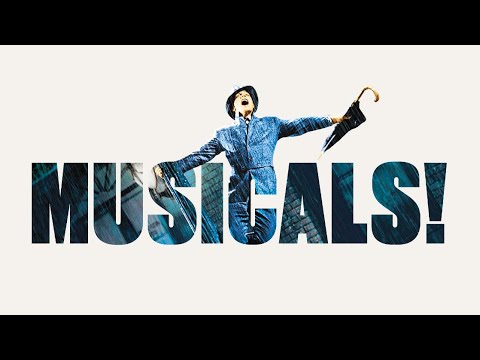
Press Release > BFI Edited by: Chris Olson The UK’s greatest ever season celebrating the film musical, BFI MUSICALS! THE GREATEST SHOW ON SCREEN continues at venues across the country until the end of January 2020, and the BFI today updates on special guests who will take part in events during November and December at BFI Southbank. IMELDA STAUNTON (Theatre: Gypsy, Follies, Sweeney Todd, The Wizard of Oz) On Saturday 14 December, actor Imelda Staunton will introduce WEST SIDE STORY (Robert Wise, Jerome Robbins, 1961). The Oscar-winning sensation features music by Leonard Bernstein and lyrics by the great musical theatre composer Stephen Sondheim; Staunton, who has frequently performed work by Sondheim on stage (including leading roles in Gypsy, Into the Woods and Sweeny Todd), will speak about her continued association with Sondheim and her love for the film as part of BFI Southbank’s ongoing Screen Epiphanies series. JAMAEL WESTMAN (Theatre: Hamilton) On Monday 18 November one of the brightest young stars of the West End, Jamael Westman – who is currently starring as the eponymous Hamilton in the smash-hit musical – will introduce a screening of Spike Lee’s musical-comedy SCHOOL DAZE (1988), based on Lee’s own experiences at a leading (historically) black college in Atlanta. TOMMY STEELE (Film: Half a Sixpence, Finian’s Rainbow) Iconic entertainer and musicals star Tommy Steele joins us onstage for a whirlwind tour of the genre on Sunday 1 December. This afternoon of memories, clips and stories behind some of his favourite musical films, will range from the early days of sound through to the golden age of the lavish Hollywood musical. It will be an entertaining, toe-tapping journey that will encompass the work of Busby Berkeley, Eleanor Powell and perhaps even a reminiscence from Steele about his own role in genre. PATRICIA WARD KELLY (Wife and biographer of Hollywood legend Gene Kelly) Following on from her sell-out event Gene Kelly: The Legacy – An Evening with Patricia Ward Kelly in October, Gene Kelly’s wife and biographer Patricia Ward Kelly, returns to BFI Southbank in December. Patricia will introduce a screening of AN AMERICAN IN PARIS (Vincente Minnelli, 1951) on Friday 13 December, offering audiences an insight into the making of this MGM classic. CLARKE PETERS (Theatre: Five Guys Named Moe (writer), Guys and Dolls, (actor), TV: The Wire) On Sunday 24 November iconic musical SWEET CHARITY (Bob Fosse, 1969) will screen in a brand new 4K restoration. The screening will be introduced by actor Clarke Peters, currently appearing in His Dark Materials and probably best-known for his role as Lester Freamon in The Wire. Possibly unknown to some audiences is the fact that Clarke has worked in musical theatre for decades, including starring as Sky Masterson in Guy and Dolls at the National Theatre, and writing award-winning musical Five Guys Named Moe. KERRY ELLIS (Theatre: Wicked, We Will Rock You) On Wednesday 4 December BFI Southbank will welcome West End star Kerry Ellis to introduce a screening of family favourite THE WIZARD OF OZ (Victor Fleming, 1939). Given Kerry’s long-standing role as Elphaba in the West End smash Wicked when the show first opened, audiences will be treated to a unique perspective on THE WIZARD OF OZ, at this special screening in the run-up to Christmas. BFI MUSICALS THE GREATEST SHOW ON SCREEN will be in cinemas and venues across the UK from October 2019 to January 2020 and will celebrate the joyful, emotional, shared experience of watching film musicals; with the biggest stars, the most iconic scenes and the best-loved song and dance numbers on the big screen where they belong. #BFI #BritishFilmInstitute #PressReleases
- Just Lie Here short film review
★★★★ Directed by: #MercedElizondo Written by: Merced Elizondo Starring: #TreyPeyton, #ChristopherPhipps, #AprilHartman, #CoryKays Short Film Review by: Chris Olson To Trust is to Risk is the strapline for this indie short film Just Lie Here from writer/director Merced Elizondo and it’s a movie where the risks pay off. Full of intense drama and heightened suspense, audiences may very well never use AirBnB again! Trey Peyton plays Jude, a musician who has paid online to stay at the lovely home of Linda (April Hartman) and Thomas Clarke (Christopher Phipps). After awkward introductions are made by the couple, apologising for not being there when Jude checked in the night before, the trio go about an uneasy yet hospitable repartee and the hosts attempt to ensure a 5-star review is garnered by making Jude as comfortable as possible. During a particularly cringeworthy lunch, Jude questions the married couple about their choice to open their home to strangers, and therefore risks. To say much more about the plot of Just Lie Here would be to spoil it but suffice to say this is a commendable and engaging piece of cinematic storytelling. Full of modern relevance and subtle threat, Elizondo knows how to filter his audience through a series of #filmmaking nuances so that our expectations are never met - thankfully. It is unpredictable and full of relentless anxiety, the audience probably haven’t panicked this much since booking a city break for three nights for less than £100 in South East London! Peyton is the perfect picture of weirdo, a casually charming man whose not-that-subtle hints that he’s the potential risk in the Clarke’s home is terrifically balanced - not too cartoonish and not so malicious we avoid him entirely. In fact, his turn is the most compelling aspect of Just Lie Here, similar to other onscreen incarnations of the threatening stranger or the psycho-in-waiting. Some of the dialogue with Phipps and Hartman is a little strained at times, as if nervous about facilitating a storyline reveal rather than the characters, however this is minimal. By drawing on themes of isolation, the digital unknown, and the family home, the #filmmakers are deftly playing with #horror themes but in a way in which the audience is still being grounded by the affability of the characters and mise en scéne. Much like Ari Aster’s Midsommar, this is a daytime piece whereby viewers are unsure of the threat level because they can see everything. We identify with the Linda and Thomas and share their worried looks at each other whilst unsure whether we can even trust them! It is well handled #thriller material and consistently nerve wracking. Short filmmakers are often champions of the scary story because the folklore narratives work well within a shorter structure. Terrifying and tiny, you could say. With Merced Elizondo's #shortfilm Just Lie Here, we are not getting the squalid box room though. This feels like we are getting a full-blown horror flick for the price of a feature, complete with all the amenities you could ask for. Just don't expect your security deposit back if you make a mess in the bathroom. #ChrisOlson Watch the Short Film Trailer:
- Belushi's Toilet indie film review
★★★★ Directed by: #AndrewWright Written by: Andrew Wright, #MarkSear Starring: #MarkNocent, #HaydenFinkelshtain, #AlexFrankson, #JamesSoaresCorreia Indie Film Review by: Chris Olson Belushi's Toilet Movie Review Drugs are not bad, m'kay, in this comedy sci-fi from director Andrew Wright. Belushi's Toilet is set in a world where narcotics use is completely acceptable if not encouraged. So a misfit group of lads seek to find the perfect high without the inevitable comedown. Mark Nocent, Hayden Finkelshtain, Alex Frankson, and James Soares-Correia play the aforementioned friends, the latter of whom's character has access to new and exciting legal but untested drugs. Together they use weekends to test and trial new doses and report back to each other on the remarkable, and sometimes terrifying, side effects. It's like American Pie meets Trainspotting set in the future. Aside from the terrible name and overlong running time, there is a lot to like about Belushi's Toilet. Wright and co-writer Mark Sear continually tap into intriguing philosophical dilemmas with their characters and plot, and explore ideas that only a new world order could sustain. There is a playfulness to the #filmmaking, with plenty of surrealism, to ensure the audience is on board for the trip. At times, the preachy dialogue regarding existentialism and the universe feels indulgent, like watching a group of high guys filibustering beyond their welcome at a party, but many of these scenes contain nuggets of wisdom and at least entertaining paranoia. The chemistry between the four leads works well, with each performer seeming to riff off the increasing anxiety of the other. As events spiral and the fabric of their lucidity tears, so does their friendship and this is the most compelling aspect of the indie movie. A subplot involving the failing health of Adrian's (Nocent) grandmother also provides a welcome amount of emotional depth and investment for the viewer. It is Nocent who cements the film overall, with a strong performance that resonated for being comedic and laced with pathos. Other films that have explored the futility and potential hypocrisy (alcohol is a drug too guys) of a War on Drugs often focus on the gangs and violence that emerge to service the demand. With Belushi's Toilet, and this is what makes it a fairly remarkable indie film, we get to see what happens with average people in a society where recreational drug use is, well, recreational. The effect on human relationships is explored intelligently and there are some good laughs along the way. It probably has more in common with Pineapple Express than Requiem For A Dream but Belushi's Toilet is a worthwhile dose of ambitious storytelling. Whilst side effects include prolonged running time and a flaccid final third, the comedown is well worth the highs. #ChrisOlson Watch a Movie Trailer
- Eli Netflix Film Review
★★ Directed by: #CiaránFoy Written by: #DavidChirchirillo #IanGoldberg #RichardNaing Starring: #CharlieShotwell #SadieSink #KellyReilly #MaxMartini #LiliTaylor Netflix Film Review by: Charlotte Little A boy with a mystery illness questions his experimental treatment in an intriguing tale that spirals into an abyss of stupid. Paramount reportedly offloaded the film to Netflix, as they allegedly couldn't market it. This uncertainty raises an eerie question as to the profitability of the genre, considering a major studio couldn't figure how to market a low-budget horror film. The Netflix supernatural horror flick centres a young boy, Eli (Charlie Shotwell), who suffers from a severe auto-immune disease, making him allergic to the outside world. Fortunately, his parents (Kelly Reilly and Max Martini) have found a possible solution. They travel to an isolated mansion to receive an experimental but promising treatment afforded by their scrimping and saving. Eli begins to question the validity of the treatment, mistrusting Dr Horn's reassurances (Lili Taylor) as his encounters with night-time malevolence and demons grow more frequent in correspondence with the creaking of the pipes. Are the ghosts trying to harm Eli? Or are they trying to help him...? The film delicately dangles a few possibilities, gradually throwing in more jigsaw pieces as the puzzling story develops. The audience is lured into the mysterious nature of the plot, anticipating the reveal of the real motive behind the experimental treatment. Instead of exploring Eli's doubts, the film dives into stock horror tropes such as creepy corridor ambushes and abrupt reflections in mirrors and windows. Although there are very few striking or impressive shots, there is one unique shot where a vulnerable Eli is hyperventilating, with the camera zooming in and out with each inhale and exhale. Director Ciarán Foy attempts to construct a solid scare falls flat, scattering the movie with a variety of familiar horror tropes. The frightening atmosphere deteriorates at an alarming rate as the film chugs along with poor pacing. The big reveal is messy and bonkers, with the script and narrative crumbling towards the end. The performances are weak, dragging the potential of the film. One pleasantly surprising portrayal was by Sadie Sink (Stranger Things), in her role as Haley, offering a sparkle of humour among the bland and dull. Now we have a better idea as to why Paramount offloaded the movie to Netflix, suggesting that such productions are better suited for the small screen rather than a theatrical release. The first 45 minutes of the film is worth watching, but after this point feel free to multi-task or search for something else to watch. If you enjoy far fetched twists with weak foreshadowing and an empty ending, then 'Eli' is for you!
- A Life in August indie film review
★★★★ Directed by: #HastonMcLaren Written by: #HastonMcLaren Starring: #LisaMiller, #HastonMcLaren Film Review by: Darren Tilby On first viewing, writer/director (and everything in between) Haston McLaren’s film debut can feel a little jumbled and confusing—contrived, even. We follow the married couple, Harry (Haston McLaren) and Lisa (Lisa Miller) as they negotiate married life, impending parenthood, and grief. But I’d strongly implore you to watch this movie again (at around 90 minutes in length this shouldn’t be too difficult). For only on repeat viewings do all of the film’s multi-layered facets become apparent and begin to bind the story. Indeed, A Life in August is quite the thinker. It demands the audience pay attention and refuses to make obvious any of its subtle intimations. And why should it? When this much time, effort, and care has been put into creating such a layered and well-thought-out movie, it’s up to the viewer to give it the respect and appreciation it deserves. As a film that requires a good bit of effort from its audience to be thoroughly enjoyed, this is a bold feature debut, and McLaren should be commended. Staying engaged wasn’t something I found particularly difficult, however. Somewhere between the captivating performances, from both McLaren and Miller, and the gorgeous cinematography, I was utterly glued to the screen. There’s a beautiful if eerie autumnal glow present throughout the film and the beauty of Scotland is ably captured and aptly displayed by McLaren’s sublime camerawork—with the framing being practically perfect. There are a few problems here and there, however. The editing, in particular, requires a lot of fine-tuning, often cutting away too quickly and, occasionally, lingering for too long. Which creates a few awkward moments of silence between actors. But the film’s most significant issues are with its sound design. The film seemed to be, in places at least, out of sync. Although I can’t be sure whether this was a problem on my end, it’s still worth mentioning. Other than that, the music – while good – is far too loud in several scenes, often drowning out dialogue or (like in the funeral scene) disturbing the mood. Worse yet, there’s a moment in the film when our leads argue in their car, and the camera flicks between interior and exterior shots. It’s a really well-acted and well-shot sequence and gripping to boot. The problem is, as the camera looks into the car from its exterior location, we can’t hear the actors talking, though they still clearly are. There’s a couple of moments like this, I’m unsure if it’s intentional or not (although I’m guessing not), but it’s jarring either way. But it’s also worth mentioning that McLaren did, literally, everything in this film: from the writing to the visual and sound design, to the editing. And most of the issues the film has could potentially be small tweaks that may yet be fixable. All-in-all, I think this is a terrific effort from one person; a first-rate piece of independent British film-making. Despite its issues, we’re left with a well-written, well-judged, and in-depth exploration of grief and repression from an obviously talented first-time director. And while on first viewing, it’s easy to miss vital plot elements, on repeat viewing, this is a hugely rewarding experience. One you really shouldn’t miss.
- Girl on the Third Floor film review
★★★ Directed by #TravisStevens Written by #TrentHaaga #PaulJohnstone #BenParker Starring #MCPunk #TriesteKellyDunn #SarahBrooks Film Review by Hope Madden DIY Don is probably not a nickname Don Koch (C.M. Punk, aka Phil Brooks) has ever heard. Nonetheless, he has some free time, a pregnant wife in the city (Trieste Kelly Dunn) and a bruised ego, so he undertakes the restoration of the new suburban fixer upper on his own. He has no idea what he’s up against. The feature directing debut of longtime indie horror producer Travis Stevens (Cheap Thrills, We Are Still Here, Starry Eyes), Girl on the Third Floor takes the haunted house theme in directions that are both toxic and masculine. So did The Amityville Horror, but Stevens and his team of writers (Trent Haaga, Paul Johnstone and Ben Parker) aren’t concerned with a good man infected by a bad house. Stevens most impresses in lensing the film. Phil and cast regularly look directly into the camera to deliver lines or just to ask WTF? as goo and other assorted nastiness tumble and/or ooze from walls. It’s as if the audience has the house’s point of view, and since the majority of the film is “house versus Don” (and Don is clearly an asshole), it’s an intriguing and suitable perspective to take. So the haunted house is, in fact, the protagonist in this haunted house flick. Nice. In another wise and satisfying move, Stevens underscores the hero’s star qualities with beautiful, wide interior shots that emphasize the house’s elegant and forbidding nature while appearing to trap the ever-foregrounded Don. In his first film, WWE performer Punk mainly impresses or at least holds his own, shouldering at least 50% of the film entirely alone. Well, him, some power tools, a handful of marbles, a lot of ejaculate—still, it’s mainly Punk. Stevens’s message is not entirely fresh, and the camera that ogles Dunn as well as co-star Sarah Brooks suggests the film may not be as woke as it pretends to be. (Haaga has penned some great horror flicks, but his Deadgirl confirms that a feminist he is not.) Like any good haunted house movie—The Haunting, The Innocents, The Shining, even the Stevens-produced We Are Still Here, where the horror was in the basement rather than the third floor—it’s the unsettling, otherworldly images and mystery that bring chills. Third Floor makes the mistake of the third act exposition, revealing the source of the mystery all Scooby Doo like. It’s a too-tidy end to a decent spook show—nothing especially scary or daring or original, but an atmospheric thriller that looks good and entertains. #HopeMadden
- Parasite film review
★★★★★ Directed by #JoonhoBong Written by #HanHinWon, Joonho Bong Starring #KanghoSong #YeojeongJo #WoosikChoi Film Review by Hope Madden and George Wolf We’ve said it many times, but since there may still be people who haven’t heard, we’ll say it again. If Joon-ho Bong makes a film, you should see it. Today, make it Parasite. The film’s opening act introduces the Kim family, folding pizza boxes in a squalid basement apartment in Seoul and scrambling from room to room in search of free WiFi after the neighboring business locked theirs down with a password. In a single scene the film appears to articulate its title and define its central characters, but the Kims are not who you think they are. In fact, every time you think you’ve pinned this film down—who’s doing what to whom, who is or is not a parasite—you learn it was an impeccably executed sleight of hand. Longtime Bong collaborator Kang-ho Song (Memory of a Murder, The Host, Snowpiercer) anchors the film with an endearing and slippery performance. Kim patriarch, he is simultaneously beloved head of the household and family stooge. Watching Song manipulate his character’s slide from bottom to top to bottom again without ever losing his humanity—or the flaws that go along with humanity—is amazing. It’s a stunningly subtle and powerful performance. He’s nearly matched by Yeo-jeong Jo as the righteously oblivious Mrs. Park, who spends her days in constant search for an empty validation that comes from every new indulgence for her children. When young Kim Ki-woo ( Woo-sik Choi from Train to Busan and Bong’s last film, Okja) is able to convince Mrs. Park he’s a suitable English tutor for her daughter Da-hye (Ji-so Jung), the Kim and Park families become connected in one of the few ways afforded by the social order: master and servant. Methodically, the rest of the Kim clan gains employment from Mr. Park (Sun-kyun Lee) through the systematic feeding of the Parks’ ego and privilege. And then just when you think Bong’s metaphoric title is merely surface deep, a succession of delicious power shifts begins to emerge. Think the simmering rage of Joker with a completely new set of face paint. As the Kims insinuate themselves into the daily lives of the very wealthy Parks, Bong expands and deepens a story full of surprising tenderness, consistent laughter and wise commentary on not only the capitalist economy, but the infecting nature of money. Bong, as both director and co-writer, dangles multiple narrative threads, weaving them so skillfully throughout the film’s various layers that even when you can guess where they’ll intersect, the effect is no less enlightening. Filming in an ultra-wide aspect ratio allows Bong to give his characters and themes a solid visual anchor. In single frames, he’s able to embrace the complexities of a large family dynamic while also articulating the detailed contrasts evident in the worlds of the haves and have nots. Parasite tells us to make no plans, as a plan can only go wrong. Ignore that, and make plans to see this brilliantly mischievous, head-swimmingly satisfying dive down the rabbit hole of space between the classes. #HopeMadden & #GeorgeWolf