.png)
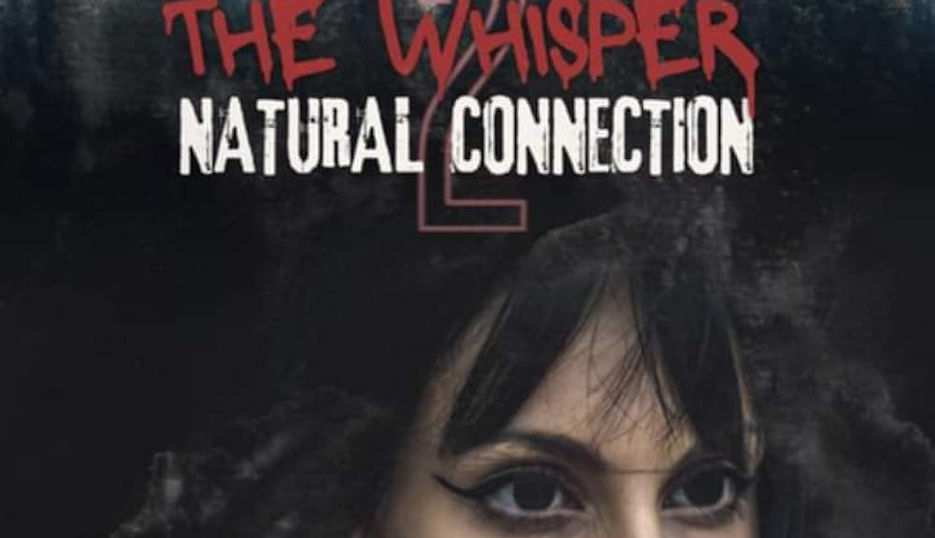
The Whisper 2: Natural Connection
Critic:
James Learoyd
|
Posted on:
Dec 30, 2025

Directed by:
Miroslav Petkov
Written by:
Miroslav Petkov, Teddy Nikolova
Starring:
Simona Rose, Phil Herman, Alicia Hinson
The Whisper 2: Natural Connection would appear to the uninitiated as just a run-of-the-mill horror short. It consists of a standard formula – a dark mystery gradually unravels before the protagonist’s eyes as supernatural elements begin to seep into the horror. It has a haunted, wandering vibe; very little dialogue or plot. It then concludes with a ‘shock’ ending of sorts. Pretty normal film, right? – Wrong! This is, in fact, one of apparently three movies made by the same people depicting the same thing. This critic has seen the first short film in this ‘series’ (you’ll notice it’s called The Whisper 2), and according to notes provided by the filmmakers, there is a later feature entitled Whispers. I, for one, find this quite fascinating – particularly when we consider how little story either short contains. We can then surmise that, as opposed to wishing to explore characters or themes deeper, this must be a formal experiment of sorts; a blank genre-based canvas upon which the director can practice camera and editing techniques. And through replication or aesthetic repetition, some form of creative discovery must surely arise – not just for the creatives behind the piece, but potentially for the audience as well...
Before deconstructing this further, let us first analyse the piece in isolation. In cinematic terms, the first thing one maybe notices is that – whilst the camera quality and lens-work leaves something to be desired with its low-budget digital feel – the direction itself, and the visual ideas at play, are incredibly effective. There’s some real suspense being forged through camera movement as well as the crafting of perspective, which go hand-in-hand. Quite intelligently, the director knows that to maintain a subjective sensibility, the camera must remain in motion whenever the protagonist is traversing her environment. In the opening sequence, as she observes with terror every ‘missing’ sign in her vicinity, we get a series of immersive shot-reverse-shots. She wanders and the camera wanders with her; we transition to the signs, and instead of a static closeup, the shot adopts a floaty, glancing characteristic. Through this, we remain in the mind of the subject and visually become the character.
There’s a bunch of fun visual ideas, much like the one described, sprinkled in throughout. But can more be garnered from these formal flourishes when placing the film in contrast with the original version? – are there further nuances to be found? Having just now rewatched the previous version, I have a couple important observations. While what ‘happens’ is virtually the same, the manner in which the story is told is surprisingly distinctive. The main visual difference is how the original uses a lot of static wide shots, locked down on a tripod. You could argue that this makes the first appear more conventionally professional-looking, but I’d also argue that it makes it less immersive compared to this one. However, there’s a slight suggestion in the first film that some shots are from the perspective of the ghosts, which is unnerving. The latest, on the other hand, completely commits to the ultra-subjective single moving perspective. What a fascinating experiment!


About the Film Critic
