.png)
Furias Corto
Critic:
India Gwyn-Williams
|
Posted on:
May 20, 2026

Directed by:
Ruben Sanchez
Written by:
Ruben Sanchez
Starring:
Tarek Ouahabi, Daoud Zaani, Ammar El Hachemi, Mohammed El Amine
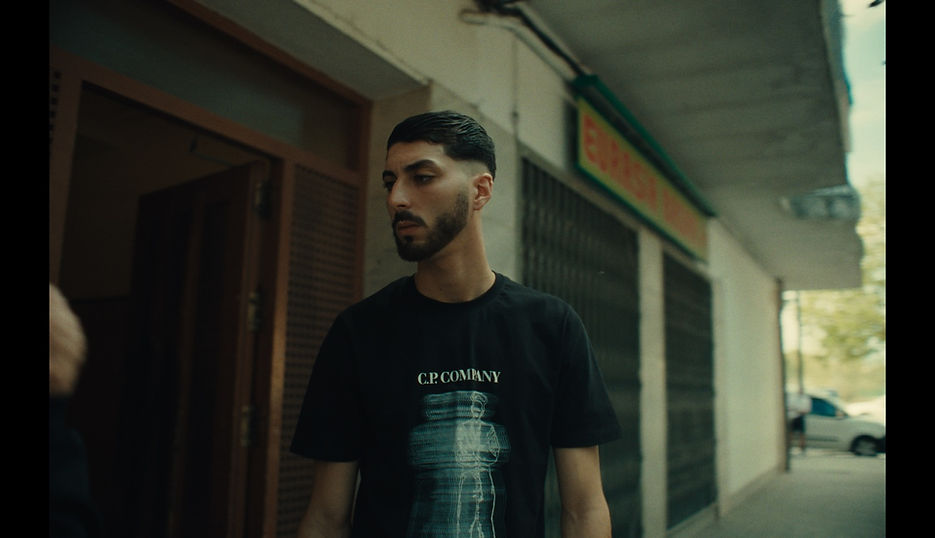
Furias follows the character Jacob, living in Morocco. By having a camera observe him the audience naturally meet the community surrounding our protagonist, as all seem to approach him for help or advice. This quickly establishes Jacob’s altruism, responsibilities and seemingly parental status to those in his life, without the film explicitly saying so.
Someone so quietly trustworthy and generous leaves him little alone time with the audience - as a magnet to others his day is saturated with social interactions. What triggers the camera’s departure is an ugly incident which leaves the viewers wondering how a character, so familiar with morality and selflessness, will change or respond to the event he, least of all, deserved.
The short film utilises a handheld camera, which offers a naturalistic and personal viewing experience. There is a further artistic element of the shots which range from close framing of Jacob and the people he has connections with, to unoccupied frames of the city. Not all his interactions are stationary or front facing, instead it seems the camera’s only objective is to stay close to our protagonist in any position. The variety of shots mimics the range of people we meet, highlighting the amount of connections he has and the significance of his character. He commands the story, standing as its life source.
The dialogue compliments the visual style of the film, as we hear parts of conversations that began existing off screen. It does not accommodate the audience's understanding of specific happenings or discussions, but it does leave room for the viewers to interpret what kind of life Jacob leads and what person he is. The narrative adds to the natural flow, but it simultaneously can make audiences feel the story is underdeveloped. The decision to communicate the wider plot through showing rather than contextualising means viewers are left with multiple short, unfinished narratives, which makes it hard to identify the structure of the story. However this may be a conscious decision to deepen the impact of an unanticipated closing incident, which triggers the camera’s departure. This arguably represents that all his other responsibilities, relationships, duties with or for others ends with this event. The director once again uses a stylistic rather than narrative method to communicate to the audience. In this instance, by ending unexpectedly there is a closing message on life’s unpredictability. The heaviness of our lives and the imbalances in the world means one connection can outweigh everything.


About the Film Critic
