.png)
Kontinental '25
A new film from the Romanian auteur Radu Jude is never merely a release; it is an event, a declaration, and invariably, a provocation. The promotional material and critical buzz surrounding Kontinental ’25 confirm that the winner of the Silver Berlin Bear for Best Screenplay is not only back, but operating at a fever pitch of urgency and daring. Fresh off the back of the controversial, Golden Bear-winning Bad Luck Banging or Loony Porn and the acclaimed Do Not Expect Too Much From The End Of The World, this latest work is instantly positioned as a vital piece of contemporary European cinema, cementing Jude’s status as a director working on a level few of his contemporaries can match.
Jude, whose sardonic eye is keenly focused on the hypocrisies and anxieties of the modern world, seems to once again be blending the searingly serious with the unexpectedly absurd. While the film’s premise suggests a deep moral excavation, the anticipation is that it will be punctuated by Jude's signature dry wit—a crucial ballast against the subject matter—and perhaps, true to form, the occasional inexplicable sight of a dinosaur statue. This is the hallmark of Jude's unique approach: confronting societal decay with an incisive yet ambiguous cinematic language that never offers easy answers, only profound questions.
At the narrative core is the performance of Eszter Tompa, an actor who will also appear in Jude’s forthcoming take on the Bram Stoker classic Dracula. Here, Tompa is cast as a bailiff, a figure of systemic authority whose work forces her into a direct confrontation with the economic realities of those on the margins. When a tragedy occurs connected to her professional duties, she is plunged into a profound moral quandary. The role of the bailiff—the executor of final, cold economic logic—makes Tompa’s character a perfect vessel for Jude to explore the theme of systemic social violence. The cinematic portrait promised is one that is "urgently up to the minute and strikingly provocative," ensuring that the viewing experience will be anything but comfortable.
Perhaps the most radical detail revealed is the film’s production itself. Shot back-to-back with the Dracula project, Kontinental ’25 was completed in just ten days and, crucially, shot entirely on an iPhone. This aesthetic choice is not a gimmick; it is a profound artistic statement. Jude has articulated his discomfort with the "mismatch" of multi-million-dollar budgets being applied to films about social violence and poverty. By embracing this lo-fi, naturalistic energy, the director not only achieves a raw, street-level authenticity, but also delivers a powerful challenge to the commercial industrial complex of cinema itself. It is a demonstration that essential stories can, and perhaps should, be told on their own terms, free from the sanitising polish of a massive budget.
The film's conceptual framework adds another fascinating layer, being described as a "playful, persuasive homage to Roberto Rossellini’s Europe ’51." Rossellini's post-war neorealist masterpiece was a towering work of moral and social scrutiny, focused on an individual’s struggle for meaning and responsibility in a broken society. By deliberately invoking this classic, Jude is positioning his work within a rich historical tradition of committed European filmmaking, yet promising a work that remains "definitely unique and surprising." This fusion of neorealist spirit with the audacious, contemporary flair of one of the most innovative directors working today is what makes Kontinental ’25 one of the most highly anticipated pictures of the year. It promises to be a challenging, witty, and essential piece of cinema that only Radu Jude could deliver.
Ultimately, the promotional material for Kontinental ’25 is not just selling a film; it is issuing a call to attention. It is a promise of a morally complex drama, filtered through a radical and minimalist aesthetic, all presided over by the sardonic brilliance of a genuine cinematic iconoclast. For those who seek cinema that provokes thought, demands engagement, and challenges the status quo, this latest offering from Radu Jude feels indispensable.


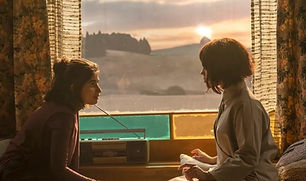

Power Ballad
What has us incredibly excited about Power Ballad is the dynamic friction between its two leads. Paul Rudd seems perfectly cast as the rugged, everyday musician who just wanted a shot at the big time, acknowledging with a heavy heart that having his name on a song of that magnitude would have completely changed his life.

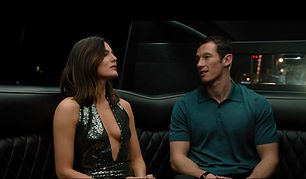


Dune: Part Three
Picking up roughly seventeen years after the seismic events of Part Two, the trailer immediately signals a shift in tone. While the first film was an act of world-building and the second a visceral war epic, Dune: Part Three—an adaptation of Frank Herbert’s Dune Messiah—looks to be a far more claustrophobic and tense affair.


