.png)
Glinting
Critic:
William Curzon
|
Posted on:
Jul 8, 2026

Directed by:
Eddie Jackson
Written by:
Eoin O'Sullivan
Starring:
Eoin O'Sullivan, Brid Ní Chumhaill, Maureen O'Connell
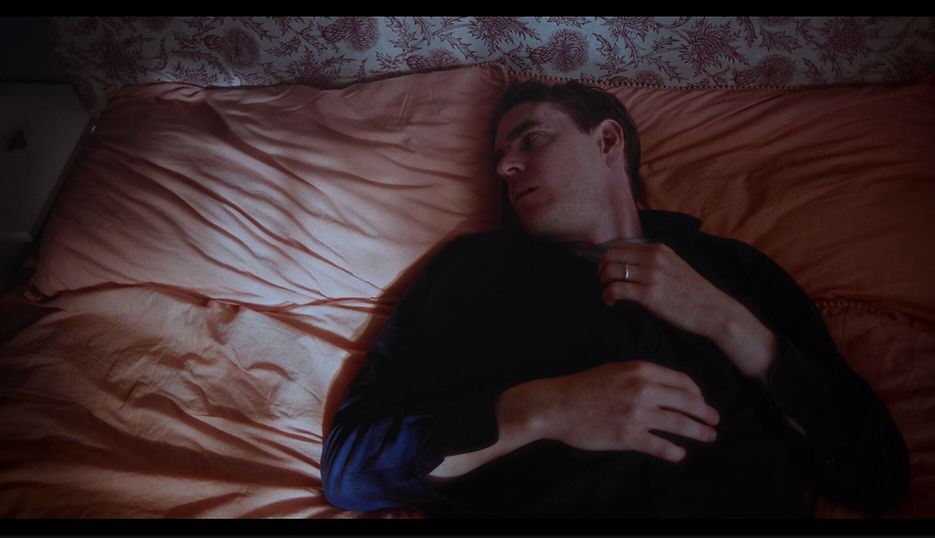
Glinting follows a grieving husband, Jack (Eoin O’Sullivan), as he begins to sense his wife’s presence in the dust particles that catch a light around him. These dust particles draw him into moments that blur the line between memory and reality. The short piece is a harrowing depiction of grief, memory and loss, and how the central character copes with the glinting dust in his home.
The piece immediately draws the viewer into the experience by providing no context for the central character's empty home, as he is drawn to the glinting dust. While the lack of characterisation and context is daunting at first, the filmmakers ensure each scene is crafted with a clear intent to showcase the damage grief can cause to an individual. The absence of dialogue creates an isolating, thought-provoking atmosphere as the central character struggles to make sense of his late wife’s sudden appearance in their home. It's a difficult watch, but its unique formalism and harrowing presentation make it essential viewing. The surreal, dreamlike presentation of the central character’s memories during moments of stillness is highly effective, powerfully reinforcing the film’s themes and ideas.
Serving as the film's cinematographer, Jamie Doyle primarily employs fixed wide shots of the house to emphasise its emptiness, punctuated by close-ups of objects scattered throughout. This approach effectively frames the central character’s home as a space where memories of his late wife are evoked through everyday objects and drifting dust particles, blurring the line between memory and reality. At times, the camera also shifts to extreme close-ups of the central character in anguish, and this is incredibly devastating to witness as a viewer. Another incredible technical aspect is Karima Dillon El Toukhy’s musical score. The score is evocative with its hypnotic motifs that ultimately anchor the tension and severity of the central character's grief. Each musical cue feels perfectly suited to its scene, resulting in an unforgettable viewing experience.
Eoin O’Sullivan delivers a compelling central performance as Jack, anchoring the film from beginning to end. He conveys so much with his facial expressions alone, making the experience all the more visceral through the raw honesty of his performance. Much of the narrative is focused on his performance, and the film wouldn't work without his commanding screen presence. The supporting players also leave a memorable impression despite their lack of screen time.
While the piece doesn't offer much beyond its portrayal of a character processing his grief, its condensed runtime is well utilised, and it rarely puts a foot wrong. Each editing choice is profound, and it never overstays its welcome despite how harrowing its themes and ideas are. It's a deeply emotionally resonant experience, particularly in its exploration of the lasting damage grief can cause. The focus on themes of regret is also apt; the piece alludes to the importance of cherishing every moment while you still can and opening up to another individual before it's too late. The piece leaves the viewer soaring with hope, as the title suggests, the glinting dust shining with flashes of profound memory.
Glinting is a harrowing experience with a dreamlike presentation to convey its emotionally resonant themes of grief, memory and loss. Aided by a terrific central performance and a hypnotic musical score, the film is an effective piece of filmmaking that doesn't shy away from the sheer isolation of grief.


About the Film Critic
