.png)
A Murder In Oakland
Critic:
Lee Sinden
|
Posted on:
Oct 13, 2026

Directed by:
Marcus D, Spencer
Written by:
Eduardo Castrillo and Marcus D, Spencer
Starring:
Marcus D, Spencer, Chris Crofut, Ci Ci Foster, Sherill Quinn and Lyric Hobbs
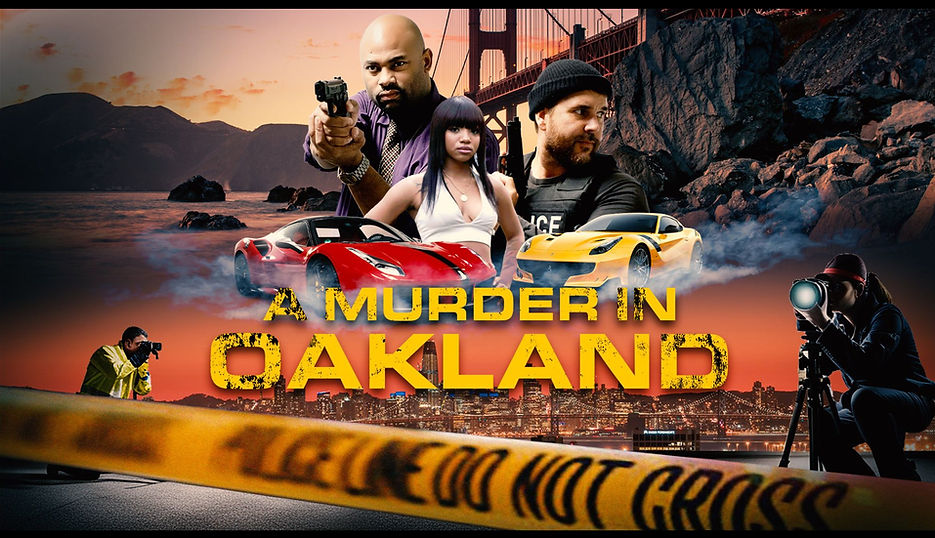
The title clearly signals what this film is about, and there are no surprises. The opening scene plays out the murder of a young woman. She is strangled on a public bench in brutal fashion, with the murderer making off. It was an open-and-shut case, but new information has been received, which puts the original outcome into question. Detective Williams (Marcus D. Spencer) is tasked with the investigation. He is an officer dealing with professional and personal problems, having been cleared of embezzlement and struggling with relationships at home. His boss teams him up with a transferee, which adds to his woes.
Although this isn’t a long film, it moves at a very slow pace at times and could do with a real energy boost. You’d expect high-octane action, but the film meanders along. The investigation is too simplistic, and it reaches a conclusion without really showing much investigative work. It would have been good to see some real police work. The film shows very little about how the murder investigation is solved, which makes it feel unrealistic and may cause the audience to lose interest.
The best scenes were away from the investigation, as the two officers investigating tackle their demons. The scenes between the detectives have the most energy, as they show both men's emotions. They are, however, a tad cliched as most viewers will have seen scenes like this countless times. They don’t delve into the issues with much depth, which would have added to the plot and given the characters more layers.
Marcus D Spencer struggles in the role, and the dialogue feels laboured. This significantly affects the flow of many scenes. This is most noticeable during some of the witness interviews. Again, it makes the scenes feel unbelievable. The scenes where his character is angry and showing emotion are where Spencer shows the most acting skill. These scenes definitely pick the film up and keep it moving. Sherill Quinn plays the therapist, and she brings calm to many of her scenes. This works well at times, and with more depth to the script, the audience could have engaged more with these scenes. The scenes between the therapist and her partner show more of her character but seem out of place. They appear to have been added as more of an afterthought.
Despite the low budget, the sets work well and add some realism to the film. The director has chosen to bring the camera up close, and this is effective. It helps to bring the audience up close to the action and experience the emotions of the characters. The script lacks depth, particularly in relation to the investigation. There are not enough twists and turns, and ultimately the final reveal ends up falling flat. This element feels rushed, and the film needed more time to develop the lines of enquiry to solve the murder case. The relationship between Detective Williams and Detective Adams (Chris Crofut) is strained from the start, with Williams giving his partner little leeway. An argument between the two characters over the line of questioning feels contrived and unrealistic, mainly because of the quality of the script.
It is difficult to create a murder mystery, as they can be quite complex. The audience's attention needs to be diverted away from what is happening in order to create suspense. It is important to keep the viewer guessing, but not make the outcome seem too far-fetched. We are all amateur sleuths at heart, which is part of the fun of watching murder mysteries. This is what keeps the audience engaged. Unfortunately, the film feels rushed, not unlike the work of the original officers who convicted the wrong man. I don’t feel it has enough to keep the audience engaged, and the slow dialogue may frustrate. Unfortunately, many scenes fall flat, and the story isn’t developed well enough.


About the Film Critic
