top of page
.png)
Search Results
Search this site
All (10134)
Other Pages (3975)
Blog Posts (5322)
Products (33)
Forum Posts (804)
Filter by
Type
Category
804 results found with an empty search
- Bird Box (2018) - Simply. This is a must-see.In Film Reviews·January 5, 2019You never, ever take off your blindfold. If you look, you will die. Do you understand? Each year ends with a bang. You’ll have the end-of-year festivities and people party themselves into the new year. But when it’s about movies, this one created an end-of-a-filmyear-bang. Frankly, I didn’t expect too much of it. But maybe my prejudice about Sandra Bullock has something to do with that. I readily admit that I’m not really a fan of this actress. Is it her way of talking? Or her facial expression? No idea. But I have already avoided a lot of films just because of her being in it. But for her acting performance in “Bird Box“, she deserves a standing ovation. I admit Sandra Bullock’s acting is brilliant. Brilliant how Sandra Bullock plays her character, Malorie. A free-spirited woman who’s on her way to becoming a single mum. All indications point to her being a cynic who prefers not to have too emotional bonds with others. Even the way she talks about her unborn baby shows how aloof she is. Even the two children, with whom she makes the dangerous boat trip, are still called by the names “boy” and “girl” after 5 years. Is it pure selfishness? Or self-preservation? Or fear of commitment? Probably. But as the film progresses, you’ll also notice that she has other character traits that make her more human. She stands her ground, shows understanding, defends others and shows how vulnerable she is herself. So thumbs up for Bullock, even though she looks more and more like Michael Jackson. The threat, helplessness and fear. But it’s not just the acting of Sandra Bullock why this film entered my list “Best movies of 2018”. The film itself impressed me. It’s that constant feeling of threat, helplessness, and fear that you get while watching this film. Inevitably one will compare “Bird Box” with “A quiet place“. In this film, the survivors had to produce as little noise as possible, because those who have conquered our beloved globe have a pair of sophisticated ears. Every sigh or groan can, therefore, be heard by them over kilometers, with the result that the person who produced the sound can’t do this a second time. In “Bird Box“, looking is already fatal. That’s why a lot is being blinded with newspapers, curtains, and blindfolds. An advantage for the pregnant among the survivors. No problem to be noisy while giving birth. Look! Oops no, don’t. You can see this film as a fusion of “A quiet place” and “Cell“. Just as there’s chaos in “Cell” after a telephone signal has changed those who were on the phone into murderous psychotics, in “Bird Box” it’s when looking at something unknown that all hell will break loose. In this film, I found that moment more frightening and more breathtaking. When I watched “Cell“, I was slightly disappointed about that moment. Perhaps because I also read Stephen King’s book and King wrote it in such a brilliant and unparalleled way that it was impossible to film it. After the general mass hysteria where a lot of suicides are being committed, we see how a group of random people is entrenched in someone’s home. Soon they are confronted with the known problems. Their food supply is shrinking so they are forced to go outside to resupply. A hazardous undertaking that provides the necessary tension. There’s also the constant threat of falling prey to the unknown danger. Or people who seek help (or something else) knocking at their door. A lot of flashing back and forth. Most criticism will probably be given to the fact that the phenomenon that causes a global suicide wave can’t be seen at all. Apart from some wind, shadows, and leaves that appear to be floating motionlessly in the air, there’s nothing to see. Is it an alien invasion? A failed scientific experiment? A virus? A social media syndrome? No idea. And weird but true, even that didn’t bother me. It stimulates your curiosity and makes you feel the same way as the victims. A feeling of helplessness and fear of the unknown. During the entire film, it goes back and forth between past and present. Normally I’m not such a flashback-fan because this usually undermines the pace and mood of the movie. With “Bird box” I didn’t have that feeling and the subcutaneous tension remained constant. A must see. It’s clear this film competes for the title “Best film of the year 2018“. Sandra Bullock steals the show and is emphatically present in almost every scene. Also worth mentioning is John Malkovich as the sometimes hard-hearted cynic and pessimist Douglas. Such a person who immediately assumes that his country is in a state of war. So he’s constantly parading around with a gun. There is also Trevante Rhodes who is the absolute opposite of Douglas. A sympathetic fellow who’s helpful and shows compassion. And finally, the two young children who act so natural at certain moments. The moment when a terrible decision had to be made during the trip on the river, was touching and brilliantly acted. It’s kind of obvious. “Bird box” left a crushing impression on me. It wasn’t so exciting that I wanted to cover my eyes. But it was a close call! Indeed, a must see. My rating 9/10 Links: IMDB More reviews here0017
- "Yardie" written by Gregory MannIn Film Reviews·August 13, 2018(Release Info London schedule; August 23rd, 2018, Picturehouse, 18:00) "Yardie" Set in ’70s Kingston and ’80s Hackney, "Yardie' centres on the life of a young Jamaican man named 'D' (Aml Ameen), who has never 88 recovered from the murder, committed during his childhood, of his older brother Jerry Dread (Everaldo Creary). 'D' grows up under the wing of a Kingston Don and music producer named King Fox (Sheldon Shepherd). Fox dispatches him to London, where he reconnects with his childhood sweetheart, Yvonne (Shantol Jackson), and his daughter Mona (Naomi Ackie) who he's not seen since she was a baby. He also hooks up with a soundclash crew, called 'High Noon'. But before he can be convinced to abandon his life of crime and follow the righteous path, he encounters the man who shot his brother 10 years earlier, and embarks on a bloody, explosive quest for retribution; a quest which brings him into conflict with vicious London gangster Rico (Stephen Graham). Getting the character of 'D' right is the key to making this movie work. Though now more relatable and sympathetic than he's in the book, it's still essential his on-screen incarnation is not only someone who could convince you he’d grown up under tough conditions on the gang-war-torn streets of Kingston, but who you could also relate to and empathise with, no matter your own cultural background. 'D' has a certain charisma in his eyes, but he also has a volatile and traumatised personality. The 'D' in the script has gone through some shit, so it’s not just about holding up a gun and screaming and shouting. 'D' is undeniably the heart of "Yardie". It’s hardly a one-man sbow. The first place we find 'D', of course, is Jamaica, during a very troubled time. Even today, some areas in Kingston, especially Trench Town, the birthplace of reggae music and Bob Marley’s hometown. After all, Trench Town is still considered one of the world’s most dangerous places, blighted by poverty and suffering frequent gun battles between it's rival gangs. The audiences can relate to the lead character of 'D'. His anger, his drive and charisma. The Rico character’s really central. You want him to be memorable. King Fox is a manipulative, imposing gang boss. He's quite a big, physical character. He's skinny and has a really interesting, singular, sculpted face. He can be genuinely very frightening, but not in a predictable, obviously gangster-y way. When we meet first Yvonne in the story, she's still a kid, trying not to get caught in the crossfire of King Fox’s ’70s turf war with rival gang 'The Tappa Crew'. Yvonne has something else going on. Of course she’s from Kingston, but she has an international appeal as well. Namely, the spontaneous street party thrown by 'D’s brother Jerry Dread meant as a way of quelling the gang war, but which horrifically ends with Jerry’s murder. The final piece of the casting puzzle js perhaps the hardest to find. On it's publication in 1992, Victor Headley’s 'Yardie' proved an instant cult hit. Put out by a two-man independent publishing operation called 'X Press', it was sold at clothing stores and outside nightclubs rather than in traditional bookshops, and through strong word-of-mouth shifted 30,000 copies. It was the first populist black title aimed at a black audience” in 'The United Kingdom'. It’s a page-turning novel full of twists and turns, with a compelling main character. It's a UK gangster story. And it explores a culture that everybody in England is a little bit aware of, but which this book really delved into. Adapted by Norman Brock "Yardie" is a story about a young man dealing with the trauma of losing a sibling at the tender age of 10. Victor’s novel captured the imagination and that of the many people that made this book a cult 80s classic. The script has all the attractive qualities of a genre movie. The film brings it to life in a unique way, in a way that's driven by 'D's experiences as a young 'BWOY' growing up in East London. The film crafts the visuals with every moment detailed in a way that the viewer leaves the film as if they're there too. It's about the trauma of 'D' to be the spine that connects all the limbs together, the violence, the love, the loss, the migration, the music, and attempt to deliver a layered portrayal of a young Jamaican man, someone you love or hate by the end but you do have an opinion on. Not only is it a period movie, set in 1973 and 1983, which required a lot of detail specific to a particular culture. "Yardie" is undoubtedly a tense, gritty thriller. It's something that sat in pop culture. The gangster element feels true to the world. The look and tone of this film is very cinematic. Obviously, Rasta culture is at the forefront, but it’s a vibrant, multicultural world. It gives you an insight and humanises these people. "Yardie" is a word that was coined by Scotland Yard about Jamaicans who came to England in the ’70s”. Drawn from the patois word ‘yard’, meaning ‘home’, it doesn’t just describe the notorious criminal element on which the movie focuses. Everybody got the banner. And a lot of black people in England were saying, ‘I’m a Yardie', and putting a Jamaican flag in their cars and stuff so they didn’t get attacked. Because Jamaicans were the feared black element among the prejudiced people in England at the time. So it has very negative connotations for most people who know it. But in the film we’re readdressing what it means. The point of film-making is to humanise the experiences of other people we would never meet, and people are gonna fall in love with the world in this movie. When the music drops, it’s gonna hit people in the most positive way, man. It’s just gonna warm up their spirits. "Yardie" is a gangster movie and a thriller. It's also, in some ways arguably, a musical, the film compares the toasting scenes with the rap battles of 2002 Eminem-starring movie "8 Mile". But as well as entertaining his audience, the film also wants to provide an insight into 'Yardie' culture. If you’re not so au fait with Jamaican culture, you’ll learn something from "Yardie".0012
- VenomIn Film Reviews·October 8, 2018Have you ever watched a film and constantly questioned every single thing that you are watching? Have you ever watched a film and afterwards thought to yourself ‘did that really happen?’? If not, then please watch Venom so you know what I am talking about. Right about now you’re probably reading a lot of different things about Venom. The critics have absolutely slammed it. Some have gone as far as calling it Catwoman bad. Fans, on the other hand like it. So what is it? Well, it’s not Catwoman bad, but it is pretty awful. You know things are bad when everyone associated with the film tries to not be. Whether that be through a review embargo, Tom Hardy saying the best bits were cut, Riz Ahmed just calling it fun, or the Marvel logo not being hugely present at the start of the movie. 📷Originally posted by queeniecatart As films go, Venom is very bizarre and I don’t really know how to start this or structure it. I think that’s a similar problem the film faced. OK we’ll start with the casting. Tom Hardy as Eddie Brock was a huge mistake for me. Superhero films, through all their faults that I find with them normally cast brilliantly. Robert Downey Jr is Iron Man. Chris Evans is Captain America. Chris Pratt is Star-Lord. What I mean is that the actor is that character. RDJ is cocky and knows it. Evans is the responsible, social justice hero. Pratt is a prat. But Tom Hardy playing an awkward, emasculated, week male is not Tom Hardy. Tom Hardy is buff. Tom Hardy is macho. He wasn’t convincing playing the role of Eddie Brock because he is not that character. So that change to Venom was unimpressive. Now, Topher Grace, who played Venom in Spiderman 3, an under-appreciated and actually good film, would have been a much better choice in this role. He is all the characteristics for the Eddie Brock/Venom role that an actor like Tom Hardy isn’t. Also, his voice was annoying and was bugging me after 10 minutes. Michelle Williams, poor Michelle Williams. What an actress. She is incredible. But my god did this film not do her any justice. Poorly underused. A positive though was the villain. Riz Ahmed did have enough screen time and he was a slight anti-hero. He wanted to save the world but at any cost. 📷Originally posted by bustedphotographer Has anyone seen Big Mouth? If you haven’t, watch it! If you have, you will know that Venom sounds exactly like the hormone monster. Am I right? The symbiote attaches itself to Tom Hardy and starts to talk to him. But it’s very odd. Venom will say one word to say what he wants ‘food’ ‘hungry’ and it was really out of the blue and in the same voice as the hormone monster. It was so bizarre! Also, at the start of the film Venom wants to destroy the earth. But after meeting Michelle Williams it changes its mind and wants to save the Earth from Riot (the other symbiote that escaped). My guess is that it saw how desirable Michelle Williams was and thought ‘wow, Eddie gets to have sex with THAT, we want some of the action’ so decides to stick around. As a plot twist, that’s pretty mental. It’s also bizarre how when Eddie turns into Venom he becomes huge and muscular. When Riz Ahmed (who is a very skinny actor) turns into riot, he becomes huge and muscular. However when Michelle Williams turns into Venom it becomes this sleek, stealthy, highly sexualised alien creature. Erm, hello toxic masculinity?! What’s that all about? Why can’t female Venom be buff, why is she sexualised so much. Is it to please the male gaze. I know there are right freaks out there who think that Venom is sexy, but I do think that. Again, another odd moment. 📷Originally posted by baelzemon Sexism and joking aside, Venom doesn’t do its 15 rated film any justice. Deadpool is a 15 and he is swearing all over the shop. I was expecting a really dark and violent film that pushed the boundaries of Marvel film-making. But it didn’t. There was no gore or bodies being ripped apart, to be honest there wasn’t really much action at all. The end fight scene was shockingly short, luckily there wasn’t much of a build up to it wasn’t that disappointing but still, it would’ve been cool to see a big boss battle. I found it quite disappointing and this was after seeing the trailer and my expectations being massively lowered. 1/5 Unfortunately Venom for me massively flopped. I’d still urge you to go see it because you’ll either won’t care from a fan side and will enjoy it. Or you’ll find it so bad (like I did) from a critic side that you’ll enjoy watching a load of rubbish. Hey, I’ve just realised. This is the superhero version of The Room!0024
- "MLK/FBI" written by Gregory MannIn Film Reviews·January 5, 2021(Release Info London schedule; January 15th, 2020, Curzon Home Cinema) https://www.curzonhomecinema.com/film/watch-mlk-fbi-film-online "MLK/FBI" "MLK/FBI" is the first film to uncover the extent of 'The FBI's' surveillance and harassment of Dr. Martin Luther King, Jr. Based on newly discovered and declassified files, utilizing a trove of documents obtained through 'The Freedom Of Information Act' and unsealed by 'The National Archives', as well as revelatory restored footage, the documentary explores the government's history of targeting 'Black' activists, and the contested meaning behind some of our most cherished ideals. Featuring interviews with key cultural figures, including former 'FBI' Director James Comey, "MLK/FBI" tells this astonishing and tragic story with searing relevance to our current moment. This documentary is about 'The Civil Rights Movement' to date. Dr. Martin Luther King, Jr. is one of the most iconic symbols of civil rights in 'The United States'. In 1987 and 1988 Dr. King went to Chicago to bring 'The Movement" from 'The South' to 'The North'. It's a wake up call to know that Dr. King wasn't always loved and embraced by 'The American' public. It's a continuation of our understanding of the contradictions in terms of how King is looked at today by most Americans, and how he was really looked at back then. One of those interesting things in the film is when Beverly Gage mentions the fact that there was a poll taken after King and Hoover met, the only time they ever met, about who was more popular. Hoover was much more popular than Dr. King. Most people forget that now, because Hoover is looked at as a pariah, but most Americans back then thought he was a hero. We embraced 'The American' notion of what 'The FBI' was all about. Watching 'The FBI' show on television, watching an old movie from 1959, Jimmy Stewart. 'The FBI' were heroes; beating the gangsters, fighting communism. 'The FBI' was so frightened and afraid of this man they're willing to go to any lengths to destroy his reputation. Something people overlook, is that the civil rights movement was not just Dr. King. America always has to create one person who takes us to the mountaintop, when there were lots of foot soldiers in 'The Civil Rights' movement who got us to the ‘64 and ‘65 'Civil Rights Act', 'The Voting Rights Act', Fred Shuttlesworth and Ralph Abernathy and Dorothy Cotton and Fannie Lou Hamer, there were so many people, it wasn’t just King. He’s been made into the titular head. There’s more than one way to look at Dr. King, and at 'The Movement'. There's a very important distinction at the end of the film that 'The FBI' wasn't a rogue agency. King was pitted against the entire power structure of the government, in that 'The White House' was privy to the surveillance. But it goes back to this decision that was made in 1992, that in twenty-five years some of the documents collected by 'The Congressional Committee' investigating assassinations would be unsealed. Because they investigated both Kennedy and King's assassinations, when documents are released about one, there's always the other. 'The Congressional Committees' all knew about it. Nobody stopped it. So it was something that went just beyond 'The FBI-Headquarters' and the suspicion of King in the halls of power persisted for so long. You know, Reagan didn’t even want to sign the holiday into law. We know, of course, there were allies in 'The Movement' who might be tipping off 'FBI' agents about King’s plans, but the new discoveries make it plain how coordinated and vast the bureau’s sources were. You get to a point where, on the night he died, for example, they’re not even tapping his phones anymore, they've such good informant coverage. All the same, it’s important to note that, given Hoover’s motives, you can never take anything that's in these files, even once they're declassified, at face value. One must always remember the source; where it comes from and why. What happens to people who are very important in our history is that over time they're revisited. A great example is how we grew up thinking Abraham Lincoln freed the slaves. Now, we learned over time that Lincoln didn’t initially want to free the slaves. It just became something that was necessary to win 'The Civil War'. In some ways he wasn’t 'The Great Liberator' or 'The Great Emancipator'. But has it really tarnished his reputation? Not really. You know, he's still considered one of the great American presidents. So the fact that we've known this already about Dr. King, that he was not a monogamous man, that he was a human being like everybody else. It's always interesting to learn the true story behind these organizations that we mythically make so heroic. The film looks at the complexity and the accuracy of 'The American' landscape in terms of the federal government. This film is a wakeup call for America, to understand how complicated this notion of being American is, and how complicated 'The FBI' is today. It’s eerie how similar the crisis over 'Black' safety inequality in the period covered by the film feels today. And 'Civil Rights' issues are once again at the fore of 'The American' consciousness. We're a country that's always constantly struggling with the issues of race, because this country is founded on the backs of slaves. We've what we call a tipping point and a reckoning in America with Trump in office, with 'The Black Lives Matter' movement and the protests after the murder of George Floyd and the horrific murders that are taking place in this country. So it's extremely timely. But this film will always be timely, because America and the issues of race never leave. 'Black' men being murdered in the streets of America, by the police, is endemic. It happens every damn day. The work of administrations is to say there's chaos in the streets, get your weapons out because America is going to fall apart, it happens not only in 'The Republican' administrations, but it happens in 'Democratic' administrations. This is not unusual, but it's like a huge avalanche now. What Dr. King went through and what America's going through today is so connected. The importance of protesting speaks directly to what's happening in the streets of America today. Because this is America, quite honestly, and unless we've a real revolution, it's going to be the same cycle over and over and over again. Above all, it's what this story tells us about the American character. Especially right now.00245
- Alice Doesn't Live Here AnymoreIn Film Reviews·August 25, 2018In some ways Alice shares a lot of the same DNA with some of Scorsese's more recognisable films from the 70's - there is support from Harvey Keitel and a young Jodie Foster, (indeed in watching this again recently you are reminded just how intimidating a screen presence Keitel was and how much charisma teenage Foster possessed) there is a great soundtrack and the film creates a distinctive world for its characters to inhabit; However, this road movie really is a departure for Scorsese from the films that would come to define him. Ellen Burstyn plays Alice, a recent widow and mother to a precocious son. Following the death of her husband Alice is freed from an unhappy marriage and she and her young Son Tommy pack up and take to the road to travel to Monterey, California, the only place where Alice ever felt truly happy. Alice wants to make it as a Singer but along the way, in order to make ends meet, she is forced to take a waitressing job in a small town where she befriends another waitress, Flo (Diane Ladd) and falls for a local farmer (Kris Kristofferson). The dialogue is snappy and it clips along at a nice pace. Alice is sharp witted and her exchanges with her son Tommy give the film a real sense of warmth and convey that they are in it together. Burstyn and Ladd are great on screen together and after a frosty to start to their friendship their relationship is utterly believable and, rarely for a 70’s New Hollywood film passes the Bechdel test with ease. Burstyn is fantastic as Alice, a Woman in her mid thirties who married young and chose the wrong man. After her husband’s death she is left penniless with a wise-cracking son to care for. Her performance manages to convey a compelling blend of world weariness and worry for the future with a spirit and optimism and great humour. The romance with Kristopherson feels a little forced and it may have made for a more compelling story if they don't end up together but rather Alice finds happiness in her independence, that being said, it is interesting to see a gender reversed 'manic pixie dream girl' archetype playing out on screen. This was Scorsese’s first major movie following the unexpected success of his breakthrough hit, Mean Streets. He was referred to Burstyn by Francis Ford Coppola who was looking for an up and coming director to bring her vision for Alice to the screen. The fact that this is someone else’s artistic vision brought to life by Scorsese makes this an interesting film to watch in the context of his wider career. The direction is simple but effective, there are one or two visual flourishes that Scorsese fans will recognise as his but this is clearly Burstyn’s film. The combination of these two creative influences gives us a film that is full of Scorsese’s trademark vibrancy and energy but is also a thoughtful and nuanced exploration of a Woman attempting to make sense of her situation and forge her own identity. As a viewer we root for Alice each step of the way and by the end of the film are left more confident that wherever she lives she has what she needs to be happy.0033
- Star Wars: The Last Jedi (SPOILER FREE!) 4.5/5In Film Reviews·December 18, 2017It's December 2017 and time for us to finally see the big release that many of us have been waiting to see for the last two years. I am of course talking about Episode VIII - Star Wars: The Last Jedi. This is also the long awaited return of Luke Skywalker. The last time Mark Hamill's Skywalker was seen on screen was back in 2015 at the end of The Force Awakens (Episode VII) while standing on a cliff side on a secluded island in front of Rey (Daisy Ridley) as she attempts to reunite the Jedi master with his infamous blue lightsaber. The Last Jedi picks up right from where the Force Awakens ends. Film Synopsis General Leia Organa (Carrie Fisher) and the rest of The Resistance continue their fight against The First Order which is commanded by the Supreme Leader Snoke (Andy Serkis). The Resistance's best pilot, Poe Dameron (Oscar Issac), leads a a risky but effective mission to destroy the Dreadnaught - an empire ship loaded with heavy artillery. Meanwhile Rey (Daisy Ridley) has found her way on to the uncharted island of Ahch-To to try to convince a depressed and hermit like Luke Skywalker (Mark Hamill) to return to his sister and the resistance to save the galaxy from Snoke and a conflicted Kylo Ren (Adam Driver) after he had murdered his father Han Solo (Harrison Ford) and continues to cause heartache for mother Leia. Review Firstly for those of you feeling anxious, this is a no spoiler review. Maybe some small parts of the plot are mentioned but no big spoilers. Is The Last Jedi the greatest Star Wars release yet? Maybe not, but it is definitely in my top three. I loved the Force Awakens, but unfortunately I wasn't too impressed with Rogue One (yes I know it's a spin off). Despite believing Felicity Jones was the best casting choice for the role of Jyn Erso. So episode VIII really had to be good for me. It did not disappoint. Director and writer Rian Johnson (The Brothers Bloom and Looper), was the man in charge of The Last Jedi. He did an amazing job! This film, in my opinion is so totally different from any other film within the Star Wars franchise. If you love the typical Star Wars traits such as space battles with tie fighters and X-wings, the intense emotion from lightsaber duels and some interesting wildlife then you will love The Last Jedi. As I've mentioned the wildlife, I have to talk about the ones in this feature. Even if you haven't yet seen the film I'm sure you will have seen Porgs everywhere. In social media, plush toys in shops, on clothing and more. "Porgs are native to Ahch-To, and can be found dwelling along the cliffs of the island where Luke and Rey are. In many ways, they’re the Star Wars version of puffins. They build nests. They can fly. Their babies are called porglets."-www.starwars.com. So incase you weren't aware of what a Porg is, now you know. To be honest the little puffin like birds aren't overly important to the story, but they do add the cute factor and introduce some comedy as they seem to be nothing but an annoyance to poor Chewbacca (Joonas Suotamo). The second new critter I will briefly discuss are the visually stunning crystal arctic foxes that are seen towards the end of the movie as "they inhabit the "mineral-rich world of Crait" -https://www.altpress.com/news/entry/star_wars_the_last_jedi_new_creature_vulptex The crystal foxes are actually identified as Vulpex and they are slightly more relevant to the character's story compared to the Porgs. Of course the film sees the return of Rey (Daisy Ridley), Luke Skywalker (Mark Hamill), Kylo Ren/Ben Solo (Adam Driver), Finn (John Boyega), Poe Dameron (Oscar Issac), General Leia Organa (Carrie Fisher) BB-8 and more. In this installment director and writer Rian Johnson has also introduced new characters including quirky resistance engineer Rose Tico (Kelly Marie Tran), Leia's second in command, lilac haired Vice Admiral Holdo (Laura Dern) and DJ (Benicio Del Toro), a well known scoundrel to many across the galaxy. So lets briefly discuss the plot lines without revealing the rather large spoilers. The Force Awakens left us asking a lot of questions. Some of them are answered in The Last Jedi. Does Luke (Hamill) accept his old lightsaber from Rey? Without spoiling the answer to that question I will use a quote from master Skywalker himself "This is not going to go the way you think!" There's not much more I can tell you other than that regarding the passing of the baton. Does Rey find out who her parents are? Rey is shown in a rather trippy scene after asking 'the force' who her parents are. I won't go into it too much as it will ruin the suspense for you all. This was a very different thing to see in a Star Wars film but it did work. Also through a psychic connection (slight little spoiler) with Kylo Ren (Driver), Rey (Ridley) does eventually find out who her parents are, even though deep down she's always known the origin of her lineage. Some people I have spoken to don't agree with the outcome and believe it's a cover up for the real reveal, but I will allow you to make up your own mind and form your own opinions on that one. Lets go further into a discussion about Rey and Kylo/Ben's phsycic connection. Which actually brings up more questions in itself. Why or how are they connected? Are they related like Leia and Luke? Will Kylo Ren convince Rey to turn to the dark side? Will Rey be able to find the good in Kylo Ren and convince him to return to the light side? Some of them are answered later on in the film. So thats something to look out for. But the connection between the two characters does reel you in. I thought it was one of the best points within the feature. Adam Driver is remarkably brilliant in this film. I was not impressed with Kylo Ren/Ben Solo at all in The Force Awakens as he was full of impatient toddler like tantrums and not much else. I thought for a Sith he was a very weak character. He totally turned me into a Kylo Ren fan this time around. He really stood out. Not only is he physically and emotionally scarred, it is abundantly clear that he is still feeling very conflicted about his actions after murdering his father Han Solo (Harrison Ford) so the emotions that he portrays are really intriguing to watch. The only thing that I thought where his character was ruined was a scene depicting a shirtless Kylo Ren. It really wasn't necessary at all and probably was just an attempt to add the 'sexy' factor to the film, especially after the interest of Princess Leia's slave costume in Return of the Jedi. In continuation, for now I'll stay with the characters of The First order. Episode VIII sees the return of the fair skinned, fiery haired General Armitage Hux (Domhnall Gleeson). With his raspy and impatient tone, he remains at Kylo Ren's side working under the orders of the Supreme Leader Snoke (Serkis). As a General of the First Order, Hux is the man responsible for the many attempts to eliminate The Resistance. It was great to see more of Gleeson's on edge character in this film. Not only that he also provided us with a lot of quick witted comments bringing a sense of humour to the role too. Something we wouldn't necessarily expect to see coming from a vengeful straight faced First Order General. This is mostly seen within the first few moments within the film as there is a little on screen banter between Poe (Issac) and Hux as they converse via a communication call. Now the next character I will mention is one that I was looking forward to seeing as they definitely weren't included enough in The Force Awakens. That character is the chrome covered Captain Phasma. Captain Phasma is a female storm trooper portrayed by actress Gwendoline Christie, who has previously been seen on our television screens as Brienne of Tarth in the hugely popular series Game of Thrones. Captain Phasma products and write ups were everywhere when Christie was initially cast. Her mannerisms are very similar to her Game of Thrones counterpart, except Phasma is a bit of a cold hearted bitch. So I and I'm sure that many others had expected great things from this character. But she was completely under used in The Force Awakens and unfortunately her role in the Last Jedi was no different. We still saw very little of her on screen and when we did it was usually momentarily with simple one liners - Mostly insults such as "rebel scum!" aimed at former storm trooper turned Resistance hero, Finn (John Boyega). She really could have added so much more to the story. But sadly no. Maybe it was due to the actress' busy work schedule while continuing to work on Game of Thrones and other recent projects for the BBC. We may never know. I can't really move on from The First Order until I have mentioned the main villain of the film. The Supreme Leader Snoke (Andy Serkis). Not much is given away regarding his background story. Leaving us with possibly more questions. Although we do get to see him in his physical form this time around compared to usually seeing him as a hologram previously. Although very intimidating and clearly harnessing great power, we see very little of the 'big bad villain'. He is only seen in his what i call throne room. A large spacious room with blood red walls, containing a chair for the unsightly villain while he is surrounded by his guards, all in red. That's The First order discussed and done. I won't go into too much detail about characters that I haven't yet included in the review, if I do it's likely that I will end up ruining the mystery of the film. As many of you have seen in the trailers for the film, Finn (Boyega) is no longer at Rey's (Ridley) side. He has found a new partner in Rose (Kelly Marie Tran) when it comes to working on their own mission in an attempt to help save their friends lives. The pair work have great on screen chemistry and together they come to explore the planet Canto Bight which is basically the Las Vegas of the Star Wars universe. Tran's character is a very likeable one, she makes a great asset to the cast line up. Lastly when talking about individual characters I have to include of course our main heroes. Rey, Luke and Leia. As we already know from the trailers, Rey is in training with Luke so he is able to teach her the ways of the force. Rey begs for Luke's help as she explains "I need someone to show me my place in all of this" as she is already aware of her potential. The relationship between the two characters is somewhat rocky to begin with but it does develop more as the film continues. I was so pleased to see not only the return of Luke to the big screen, but Hamill too. I think he is one of those actors that is so diverse and unique, he's just brilliant. Hamill completely dominated the majority of the story in The Last Jedi. It's something that fans have been desperate to see for years. Not only does he deliver the most dramatic and emotional performance in the film but he also wins the award for probably the most humorous moments too. Also once again we saw an amazing performance from Daisy Ridley as Rey. She just keeps getting better and better. Unfortunately the film was overshadowed by the fact that the world lost a true cinematic icon back in December 2016. The one and only Carrie Fisher. Thankfully she had finished filming her scenes for Episode VIII before her passing, so this gave us the opportunity to see our Princess and ballsy heroine one last time. She gave a very strong performance as Leia and it is sure to be one that will never be forgotten. The film certainly gave Princess Leia the ending that she deserved and it really was a beautiful tribute to Fisher. Within the end credits there is also a touching dedication to the actress which simply wrote "In loving memory of our princess. CARRIE FISHER". Carrie you will forever be our princess. "May the force be with you always." With stunning visual effects, an amazing cast, interesting characters, plot twists and a completely new take on a Star Wars adventure, Rian Johnson absolutely nailed it. Even though I felt like aspects of the film could have made room for a little improvement, it does not take away the fact that I have just watched a fantastic cinematic release and I definitely have every intention on seeing it again. Whether you love Star Wars or not you will absolutely love this film. This review is currently on my own review website https://kasimmons8.wixsite.com/therealviewroom0011
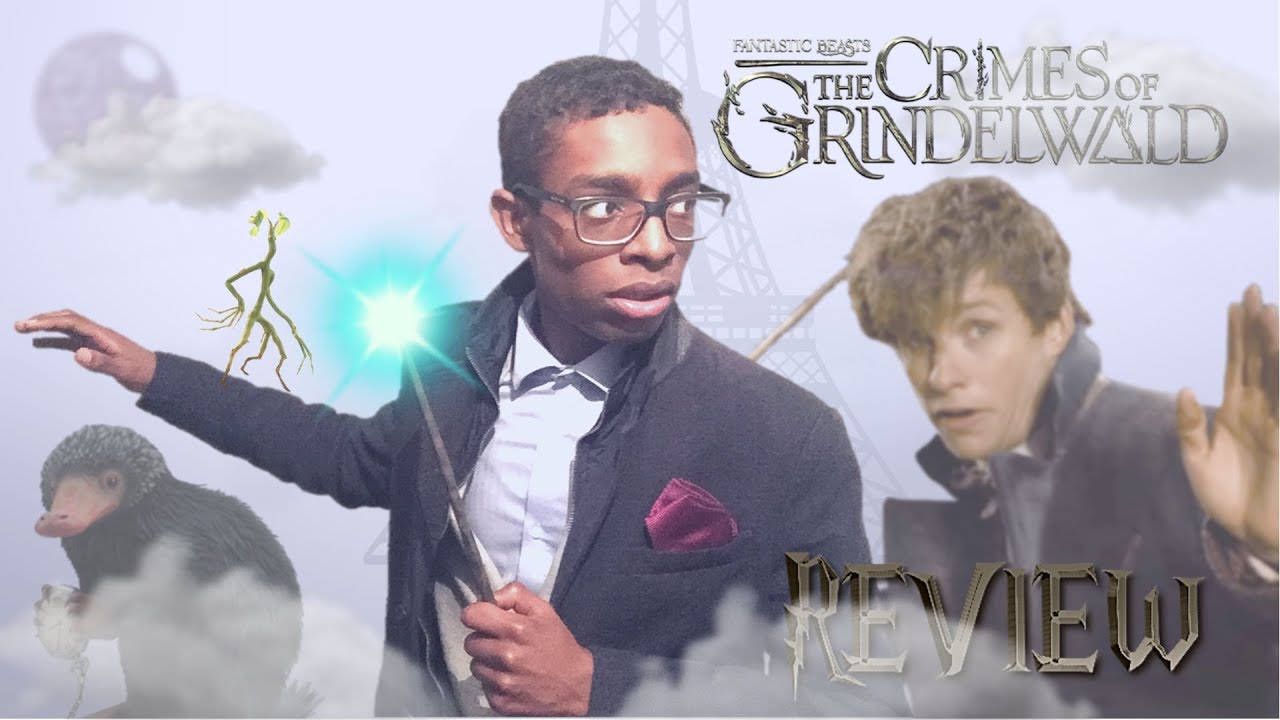
- Fantastic Beasts: The Crimes of Grindelwald | A Leviosa or Arresto? (Spoiler-free)In Vlog Film Reviews·November 18, 202100268
- "Hellboy - Call Of Darkness" written by Gregory MannIn Film Reviews·April 7, 2019(Release Info London schedule; April 11th, 2019, Cineworld Leicester Square, 5-6 Leicester Square, 12:50 15:40 18:30 21:20) "Hellboy - Call Of Darkness" Hellboy (David Harbour), is back, and he’s on fire. From the pages of Mike Mignola’s seminal work, this action packed story sees the legendary half-demon superhero called to England to battle a trio of rampaging giants. There he discovers 'The Blood Queen', Nimue (Milla Jovovich), a resurrected ancient sorceress thirsting to avenge a past betrayal. Suddenly caught in a clash between the supernatural and the human, 'Hellboy' is now hell-bent on stopping Nimue without triggering the end of the world. 'Hellboy' is an imposingly tall half-demon with red skin, shaved horns and a tail. He's a flawed and deeply conflicted character. He's not a superhero who’s always looking to do the right thing. 'Hellboy' is a big, six-foot-three fella with an amazing voice and those eyes that just captivate you immediately. He’s a freak, a weirdo and he’s humiliated by human beings. He's a force of nature, and you feel that through the character. The character is more accessible, more grounded, more emotional and empathetic, along with his trademark, deadpan sense of humor. There's no real normal in this world. Nimue, 'The Blood Queen', is 'Hellboy's powerful nemesis. 'The Blood Queen' is a total presence herself. You feel it in every beat of every word she says, every moment she takes, every look she gives. Her points are valid, but she’s defeated. For 'Hellboy', Nimue is more than just a supernaturally powerful witch. He learns she has a deep connection to his past. As an adversary, she’s incredibly challenging for him because of the issues she raises about who he really is, why he’s here and what he could become. In regard to understanding his identity, it’s like she’s sitting on one shoulder and Professor Trevor Broom (Ian McShane) is on the other. Nimue exploits that connection, and Hellboy’s own doubts and insecurities, to try to seduce him into joining her. She says to him, 'you’re one of us'. She wants to know why he’s trying to live like a human, to get these people who hate and fear him to accept him. She tells him, 'you could be a hero in my world'. She wants his strength added to her kingdom, to make it their kingdom. Professor Broom is 'Hellboy’s' adoptive father. 'Hellboy' has a close but complex relationship with his dad. It’s sort of them against the world. It’s been rough and tumble between them. 'Hellboy' didn’t grow up playing 'Monopoly' with his father, it's more that he taught him how to fight a five-eyed monster and take him out with a melon baller. He has protected him, but when he goes, 'Hellboy' will have to be a fully realized human being, to take on the human world, as well as the human-monster world. 'B.P.R.D.' Team commander Major Ben Daimio (Daniel Dae Kim) is a taciturn and secretive ex-soldier-turned-agent. He's 'Hellboy’s' complete opposite in many respects. There's something about Daimio that’s a bit of a mystery. There's unknown history about 'Hellboy' too, but what he's is right there for everybody to see. These two become foils, which is a nice texture for the film. For Daimio, it's about putting your problems and issues aside and staying with the mission. That’s not a bad way to be. In the comic Daimio and 'Hellboy' never shared a page, but bringing him into the story feels organic because he’s a fantastic character and in some ways a mirror for 'Hellboy'. 'Hellboy' also gets support in his fight against Nimue from his young friend Alice Monaghan (Sasha Lane), whose life he saved when she was a baby. The film wants Alice to be more of her own character, to have a strong voice. She's definitely not the damsel-in-distress kind of girl. She’s very much her own person. She has this great, cool vibe, and she’s been through so much. 'Hellboy’s' connection with Alice is integral to the story. It’s not romantic, but it’s definitely kind of a soul-mate thing. Because of who they're, and how they feel different from everyone else, they might feel the pull to just take the easy route, the dark one, but together they keep trying to fight the hard fight rather than just give in. Fifteen years after the first feature based on Mike Mignola’s 'Hellboy' comic book series, the time is right to reimagine the film franchise. The landscape of the horror-action-fantasy genre has changed dramatically in the ensuing decade and a half. Recent big-budget comic-book-based titles demonstrated that moviegoers are ready to embrace flawed superheroes and antiheroes and edgier, 'R-rated' storylines. There's an opportunity to push the movie in a more mature direction; more graphic, more visceral, more exciting, and thematically, a little more adult. After all, 'The Hellboy' books suggest an 'R-rating', the film is a bit more faithful to the comic books. Published over more than 20 years, 'The Hellboy' series boasts the most issues under the direction of one person among all currently published comic book series. The film is based on 2010’s 'Hellboy, Volume 9: The Wild Hunt', an anthology that includes issues of the series, as the central thread of story. In addition to being an exciting, high-stakes action epic, 'The Wild Hunt' reveals 'Hellboy’s' dramatic origin story. The film also pulls from other books, including a memorable sequence inspired by 'Hellboy' in Mexico, along with some material written specifically for the film. It's important for us, and for the fans as well, to really stick to the roots and origins of 'Hellboy'. It feels almost like a biographical or historical movie. While many of the scenes and much of the dialogue comes directly from the comic books, "Hellboy" is an amalgam of the series storylines rather than a direct adaptation of one of the books. The film also expands the scope by bringing 'Hellboy’s' world fully into 'The 21st century'. Even when they’re set in present day there’s kind of a feel of ancient times or a bygone era. It's important to give this film a contemporary feel and a contemporary setting that really grounds it in the now. So in addition to the forests and other primal settings from the comic books, the story takes place in contemporary urban London. The structure of 'Hellboy’s' face is always about the comic book illustrations. The jaw and the brow and the hardline aesthetic, that's the jumping off point. But, in taking the design into reality, the film moves from a comic world to a real world. The result is probably scarier, because he’s no longer a fire-engine-red cartoon character. He has hair on his chest and arms, back and tail, and scars, he has the body of a 'MMA' fighter. The fights are crazy. There's really a sense that things are being killed, giants or monsters, and heads are being chopped off. You’re bathed in their blood, and you’re feeling the complex emotions of actually cutting the heart out of another being. All of that goes toward the issue that 'Hellboy' is a killer, truly, a weapon. When you see Hellboy, he’s the only red in the frame. When he’s not in frame, something else is red, a fire, 'The Blood Queen’s' costumes. All of the rest of the colors are these muted tertiary colors. There are suits of armor on stands, guns, muskets, swords. Then, the further you get into it, the strangeness is incrementally cranked up. A few occultist things scattered about. Then, even further in, there are trophy heads from their hunts. The film mixtures human and animal forms, including a skull with spider's legs. It notches up to a 12 on a one-to-10 scale of weird. At times, translating the comic’s '2D' illustrations to 'The 3D World Of Cinema' required some thoughtful modification. 'Hellboy' is more horror-centric, 'R-rated' sensibility, with a mix of serious genre chops, spectacular characters, interwoven plotlines and big action set pieces. The film is set squarely in our world, rather than have it be fantasy with a capital ‘F'. It delivers a darker, more grounded version of 'Hellboy'. It’s a huge emotional journey for 'Hellboy', a journey of discovery, and then just literally, we’re going darker; bloodier, more violent. But it’s not a matter of throwing in things that don’t belong. It's always a case of, when in doubt, go back to the source. Out of all of the film’s intricate sets, is the climactic sequence between 'Hellboy' and Nimue, set on 'Pendle Hill', the site of England’s most notorious witch trials in 'The 17th Century'. There are some scenes viewers might expect would be shot on a set, but when 'Hellboy’s' standing on a hill with 'The Blood Queen', you don’t imagine the landscape has been created. When fantasy is a little more grounded, it feels stranger, in a way. It’s like if you saw a giant or a monster in your house. It’s the balance of something that’s out of place that makes it look weird and scary. The film marvels at his character’s longevity and expresses his gratitude to fans for their continued interest in 'Hellboy’s' adventures. To see that character embraced like it has been for something like 25 years is pretty great. Audiences walk away feeling they've seen an original "Hellboy" movie. Having a tail is definitely not all it’s cracked up to be. The tail is a pain in the ass. You all think you want a tail. You really. Don’t want a tail.0025
- "Blaze" written by Gregory MannIn Film Festivals·September 30, 2018(London Film Festival, October 20th, 2018, Curzon Soho, 15:15) "Blaze" "Blaze" is inspired by the life of Blaze Foley (Ben Dickey), the unsung songwriting legend of the Texas outlaw music movement that spawned the likes of Merle Haggard and Willie Nelson. The film weaves together three different periods of time, braiding re-imagined versions of Blaze’s past, present and future. The different strands explore his love affair with Sybil Rosen (Alia Shawkat); his last, dark night on earth; and the impact of his songs and his death had on his fans, friends, and foes. The braided storyline terminates in a bittersweet ending that acknowledges Blaze's profound highs and lows, as well as the impressions he made on the people who shared his journey. The primary strand follows Blaze’s last night on earth, where he performs live at 'The Outhouse', a famous bar and music venue in Austin, Texas. At this authentic country music club, seeped in history and alcohol, at the age of 39, he finally records as many of his breathtaking songs as his limited resources will allow. These songs, ranging from soul crushing introspections to goofy political ditties, end up scoring both his life and the film. This final chapter of his life is full of friends, depravity, and a darkness, that descends and casts a shadow over his tragic final hours and all who witnessed it. The second strand explores his love affair with Sybil Rosen, which significantly informs his personal and professional journeys. Their romance begins in Georgia in the early 1980’s, in a tree-house, where creativity and confidence grow in equal measure. Their relationship weathers disapproving parents, an abortion, and a fledgling artistic identity, but eventually they decide to see if it can survive the real world. The couple takes a leap of faith and leaves their paradise in the woods by hitchhiking their way to Austin. Their next home is a dirty yellow apartment that becomes a lonely abode for Sybil as Blaze travels and plays music in empty bars in no-where USA. At Blaze’s urging, they migrate to Chicago, where the weather mirrors their chilled love life, fraught with the challenges of his unsatisfied expectations and depressive demons. The third strand is set a few years after Blaze’s death, during a radio interview with Zee (Charles Adam) and Townes van Zandt (Charlie Sexton), Blaze’s fellow friends and musicians. The tension between the two is exposed as the reveal stories from their shared past with Blaze, which more often than not, are as dark as they are funny. Allegiance is called into question, along with the notion of a shared history, all working towards answering the question: what it means to be a legend. The braided storyline terminates in a bittersweet ending that acknowledges Blaze's profound highs and lows, as well as the impressions he made on the people who shared his journey. "Blaze" is based on the memoir 'Living In The Woods In A Tree: Remembering Blaze Foley' by Kevin Triplett. It's the story of a consummate American songwriter, flawed, misguided at times, but pure in his intention and compassionate to his core. Blaze Foley was emotionally honest, his voice just laid your heart wide open. His first tunes recalled the gospel hymns he sang as a child. Inspired by John Prine, Merle Travis, and Woody Guthrie, among others, he borrowed from all kinds of music, folk, country, rag, punk, the blues. He was an Americana artist before the genre existed. He was a rambler. Stage fright, anger, and alcohol came too. In 1989 he died. This is how legends got born. And what's the legend? It’s the homeless troubadour refusing to bend to the demands of success. It’s the champion of the downtrodden, the bellicose drunk, the gentle giant children adored. But mostly it’s the music, so direct and authentic it feels as if he's singing about you personally, wrapping your life in melodies that can heal. It sounds simple but really, it’s a powerful thing to be seen. We understand our sensitivities as possibilities, not liabilities. We want to believe that the world’s brokenness, and our own, could be made whole through art. Blaze Foley is 'The Snuffleupagus' of the outlaw country music scene. This film is a country western opera. The film aspires to be about creativity, and where it intersects with romantic love as a healthy manifestation, and where it intersects with narcissism as it’s negative manifestation. To separate the film and the film’s music is impossible. The film is about the music. And country music at it's simple best has an ability to penetrate. And people are always trying to make our whole generation feel like we need to specialize and excel in one area, but all these different art forms; writing, acting, singing, dancing, painting, photography, etc. all have way more in common than they're different. We've shaped one another in regards to the way we think about acting & movies. The film is extremely interested in a nonlinear relationship to time. How often moments that feel singular have their origin years before and their resolution years later. There’s a great mystery around human creativity; what it means to us, where it comes from, where it goes.0028
- "Pavarotti" written by Gregory MannIn Film Reviews·May 30, 2019(Release Info London schedule; July 13th, 2019, Curzon Cinemas, Second Floor, 23 The Broadway, Wimbledon, London SW19 1RE, United Kingdom, 6:45pm) https://www.curzoncinemas.com/wimbledon/film-info/pavarotti "Pavarotti" The filmmaking team behind the documentary "The Beatles: Eight Days A Week" turns to another musical phenomenon with "Pavarotti", an in-depth, no holds barred look at the life, career and lasting legacy of the musical icon. Dubbed 'The People's Tenor', Pavarotti was the rare combination of personality, genius and celebrity and he used his prodigious gifts to spread the gospel of opera as entertainment; and something to be enjoyed by all music lovers. Through the sheer force of his talent, Pavarotti commanded the great stages of the world, and captured the hearts of audiences everywhere. Featuring rare interviews with his family and colleagues, never-before-seen footage, and state of 'The Art Dolby Atmos Sound', this look at a remarkable man and musical giant is directed by Ron Howard. The movie opens with one of the most astounding, dream-like clips of all. The year is 1995 and the place is Manaus, Brazil, in the thick of 'The Amazon Jungle'. Here, in the mysteriously magnificent little opera house known as 'Teatro Amazonas', where Caruso himself once sang, Pavarotti is seen in his sweatpants, pouring forth with total abandon before a mere handful of passers-by. Shot by flautist Andrea Griminelli, who was travelling with Pavarotti at the time, the clip has never before been shared publicly. You see him trying to capture what his idol Caruso must have felt singing there. Here's this earthy, happy-go-lucky character who relished the good things in life with vivacious humility. But here also is a man battling the intricacies of massive superstardom, sky-high expectations and turbulent relationships, all underscored by Pavarotti’s growing sense of responsibility that he has to find a way to use his voice and power for something more satisfying and more lasting than mere fame. Much of the rare footage came directly from the personal collection of Nicoletta Mantovani, Pavarotti’s wife at his death, the mother of their daughter Alice and head of 'The Pavarotti Museum' in Modena. Nicoletta sort of becomes her husband’s videographerand it just so happened that this is the era when good video cameras are becoming available. She interviews him from time to time and it’s very fortunate, because Nicoletta captures him in a period when he has so much wisdom and perspective to share. And of course, he's open to talking with her in ways he would never talk to the host of a morning show. This footage is incredibly important to the film, because that’s where you really get to see his playful side, what a charmer and goof he could be. He thinks of himself as a peasant who has worked his way up to giving all that's in his soul and all that has been built into his character by life. Nicoletta gives the audience access to all of the archives that they've at 'The Pavarotti Museum'. And she also introduces us to his first family; his first wife Adua Veroni and their three daughters, Cristina, Lorenza and Giuliana Pavarotti. Having a famous father is not easy for anybody, whether they're a pop star, movie star or opera singer, and you get to see that. Luciano Pavarotti was born in Modena, Italy on October 12th, 1935, on the eve of 'WWII', the son of father who was a baker and amateur tenor. The first act of his life is going from a village teacher in Modena to becoming an unexpected success in the opera; the second act is 'The Three Tenors' era of his life when he experienced both incredible fame and self-doubts; and the final act is 'The Pavarotti And Friends Period', where he was raising money for children’s charity and expanding out into collaborations with artists of all kinds, bringing opera to new places and people, fulfilling his dream. Mesmerized by his father’s voice and that of his idol, Enrico Caruso, he sang throughout his childhood. Encouraged by his mother, who heard something unusual in her son’s timbre, Pavarotti only began to seriously study music after winning a regional singing competition. He made his stage debut as 'Rodolfo' in Puccini’s 'La Boheme' in 1961, impressing early on with his intuitiveness and natural ease. Pavarotti began recording for 'Decca' in 1964 and in a period of six creatively fertile years, he recorded some11 operas and 'The Verdi Requiem', which remain mainstays of his legacy. Throughout the 60s, Pavarotti slowly, carefully built his reputation not only for an increasingly impeccable tone and committed performances, but for the boundless joy and zeal for life that came through in both his singing and persona. He became known by concert-goers around the world for his star-making partnership with the beloved soprano Joan Sutherland, aka 'La Stupenda' as their affection for one another imbued their performances with intense energy and romance. In the 1970s, Pavarotti found himself at the acme of his vocal powers and showmanship, transforming into a major international superstar and media darling. At a time when opera itself seemed to be declining in influence, he continued to rapidly rise, giving epic performances on world stages while charming late-night talk shows with his down-to-earth sense of humor, beaming smile and cooking skills. One night in 1973, when his life-long pre-show nerves brought on a bout of sweating, he carried a huge white handkerchief on stage, soon to be an instantly recognized, signature trademark. By the 80s, he was the highest paid singer in the history of opera. As he entered the 90s, Pavarotti’s collaborations with 'The Three Tenors' would fill arenas and result in the bestselling album in classical music history. One of the most captivating moments in the film centers around footage of Pavarotti meeting Princess Diana in 1991. It proved to be a watershed. Not only did they become fast friends, it also seems evident he saw in her a model for how celebrity could propel good works for the world. Luciano’s relationship with Princess Diana was pivotal and as the film begins to explore the footage you can see it. He was enamored with her, but it wasn’t lust. It was a mutual admiration. She taught him in a way that there could be a tremendous sense of satisfaction from not just supporting causes but really working hard at it and devoting yourself to it. He carried that with him the rest of his life. In 1998, Pavarotti was appointed a 'UN Messenger Of Peace' and in 2001, he was awarded 'The Nansen Award from 'The UN High Commissioner For Refugee' for his unmatched fundraising and volunteer efforts. From 2001 to 2003, he hosted 'Pavarotti And Friends' in his hometown, annual benefit concerts with some of the biggest names across the spectrum of entertainment, including pop and rock. Going beyond performances, director Ron Howard combes the archives for dozens of interviews Pavarotti did for television talk shows and news magazines looking for highlights. Then, he conducts a comprehensive 53 new interviews in New York, Los Angeles, Montreal, London, Modena and Verona from April 2017 to June 2018. This series of conversations brings in the perspectives not only of wives, family members, students and fellow performers from both opera and rock, but also the managers, promoters and marketeers who helped to etch the unusual trajectory of his career and take opera to places it had never gone before. Each one is a revelation, opening up new avenues into Pavarotti’s most hidden doubts, trials and desire to reconcile his outsized ambitions with ordinary love and life. Who wouldn’t be drawn to a creative powerhouse who etched out his own unique place as the rock star of opera singers, a giant who bridged high art and pop culture as if such borders were illusory? Where did this tremendous artistry come from? It doesn’t only come from the remarkable voice. It has to come from the heart. That’s the only way you can create performances so true that they resonate forever. The human voice is the centerpiece of the movie. It's the greatest tool musically there's. Nothing crosses all disciplines in music and all touchpoints with human emotion like the human voice. What was it about Pavarotti’s voice that touched so many? Certainly, he had an astonishing reach. Early in his career, Pavarotti stunned operagoers by exquisitely, and seemingly easily, hitting all nine high Cs in 'Donizetti’s La Fille Du Regiment'. Most tenors transpose the note to a more mortal yet still highly challenging B-flat, but not Pavarotti. With that string of 'Cs', he made opera history and was thereafter dubbed 'The King Of High Cs'. But there was more to it than technical facility, more to it than even that crystalline ping and honeyed sweetness in his voice that critics hailed. There was also in his demeanor and tone something ineffable that elevated the spirit, a kind of inner vitality, a generosity and warmth that baked into the skin of the listener like the sun. He had an ability to do something many others were not able to do with their voices, to transcend their genre. He had that magical ability to create a universal experience for people across the world. His voice is about those universal emotions we seek in all great painting, music, food, love and compassion. In the documentary, Luciano Pavarotti is seen as he’s never been seen before; in a ravishingly intimate close-up that delves behind the glory of his music and the heat of his charisma to uncover his private human struggles, humor and hopes. Echoing the universal themes that have kept opera relevant in 'The 21st Century'; love, passion, joy, family, loss, risk, beauty; the film weaves a story of a man discovering, wrestling with and ultimately learning to harness the monumental enormity of his gifts. The tale of a small-town man sent on a meteoric trip to the heights of fame, trying to figure out how to bring all his roiling emotions, nerves, dreams and love for others along for the ride. To this day, people struggle to define it. But the film sets out here to uncover the man, finding an unceasingly fascinating human being formed from contrasts, mixing child-like lightness with a deep soul, a strong loyalty to his peasant upbringing and that enigmatic X-factor that drives some to the skirt the edges of human possibility. He's a testament to the power of living your life with passion and unabashed commitment to what you love. The film is a drama punctuated by passionate arias and highlighting the contrasts of larger-than-life spectacle with raw, everyday humanity. Generous and egalitarian as he was, Pavarotti was as complicated and contradictory as any human. He had his share of scandals, marital troubles and prima donna moments, and some critics and opera lovers were disappointed by what they saw as his compromising the delicacy of his art to the demands of popularity. Like any person who achieves the most surreal heights of global fame. But he also came to see his fame as a tool to etch out something larger than himself. One of his most ambitious goals was to broaden the reach of his art so that more would fall in love with opera. The film rides a fine line; authentic enough for Pavarotti aficionados to cherish and welcoming enough for those who are new to the man and his music. To him, opera was the music of the people, of all people; because it's rife with all the beauty and messiness of everyday life. They’re a form of expression that can hit you on a whole other level of emotional connection. It doesn’t matter who you're, the purity of that just moves you.0049
- Avengers Infinity War, by Daniel Hart.In Film Reviews·May 24, 2018Well it’s finally here, the film all fanboys and girls have been waiting for. The film that has taken Marvel 10 years to get to, and probably about £5 billion worth of profit that they’ve taken from the hands of poor innocent children. You know how people complained about Lord of the Rings and said there were too many endings, well I’m complaining about the multiple beginnings in this film. I think IW starts from Thor: Ragnarok or maybe Spider-Man: Homecoming, possibly Black Panther and even Civil War. See what I mean, this timeline is so confusing. The film starts on Thor’s ship where he saved the Asgardians from their doom. Only for them to be doomed by Cable…I mean Thanos, who turns up causing all sorts of mayhem. Thanos is introduced well, straight away we see that he is a clever, strong and formidable foe and this sets him up for the rest of the film. Thanos wants the Infinity Stones because he wants to control the universal population, if he kills half the population then the other half can live happily because there will be enough resources to go round. Pretty drastic right, sounds like it will be a policy in the next Tory manifesto. Thanos is a good character, certainly one of the better villains in a Marvel film and is played brilliantly by Josh Brolin. He brings so much weight and reality to the role and despite being a super bad guy who brings the character to a very emotional level. By the end of the film he has all the stones, which is kinda crazy right considering he didn’t have any before the film started. We’ve spent 10 years waiting for this film and getting to know all these stones and then in the space of 2 hours he has all of them. Like come on! As every superhero and their mother was in the film there wasn’t much chance for character development with the noticeable exception of Gamora, who, confronts her adopted step-dad and calls him out for the mental abuse he caused when she was a child. Jheeze, I didn’t know this was a Woody Allen biopic. Chris Pratt as Star-Lord is again hilarious as the dopey yet lovable Peter Quill who is the sole reason why there is a part two. You know what is dumb, the ending. The ending is stupid. I hated the ending. I would’ve been happy with some of the little side characters who have little relevance to the plot dying. That wouldn’t have bothered me. I would’ve been happy if Iron Man or Captain America died because the team would’ve been down, and then in part two they have to rally together and avenge the death of them. That would’ve been cool and interesting because that would show balls as Marvel don’t show their heroes dying because it’s a franchise and needs to make money. It would’ve been believable. You know what wasn’t cool. Everyone dying that same stupid pathetic way that Voldemort died in Harry Potter. People came out of that cinema saying ‘I can’t believe Spiderman and Black Panther are dead’ ‘How can they kill Stan’ ‘Hurry I need a wee I’ve been waiting 10 minutes for that stupid post credit scene’, as if Marvel would kill off two characters who raked in fortunes at the box office. Now it’s obvious that they’re not dead, but are like trapped in that soul stone thing and that they’ll use the time stone to go back in time. Seriously, I would’ve really loved this film if not for that ending. 4/5 The last three Marvel films released have been their better ones, and this certainly adds to that list. Despite its longevity and woeful ending it will keep every Marvel fan happy with its Whedon-esque jokes, the plentiful amount of action and the mash-up of the different characters.008
- "The Unbearable Weight Of Massive Talent" written by Gregory MannIn Film Reviews·April 8, 2022(THE UNBEARABLE WEIGHT OF MASSIVE TALENT • THE PRINCE CHARLES CINÉMA • 7 Leicester Pl, London WC2H 7BY, United Kingdom • FRIDAY 22 APR 2022 3:15pm • 6:20pm • 8:50pm SATURDAY 23 APR 2022 12:30pm • 5:55pm SUNDAY 24 APR 2022 1:00pm • 3:40pm • 8:35pm MONDAY 25 APR 2022 3:30pm • 8:30pm TUESDAY 26 APR 2022 3:40pm • 6:15pm WEDNESDAY 27 APR 2022.3:30pm • 8:40pm THURSDAY 28 APR 2022 3:50pm 6:00pm) "The Unbearable Weight of Massive Talent" Creatively unfulfilled and facing financial ruin, the fictionalized version of Nick Cage (Nicolas Cage) must accept a $1 million offer to attend the birthday of Javi Gutierrez (Pedro Pascal), a dangerous superfan. Things take a wildly unexpected turn when Cage is recruited by a CIA operative Vivan (Tiffany Haddish) and forced to live up to his own legend, channeling his most iconic and beloved on-screen characters in order to save himself and his loved ones. With a career built for this very moment, the actor must take on the role of a lifetime. In the films screenplay, Nick becomes frustrated, and a little unhinged, when he loses out on a role that he was desperate to inhabit. Moreover, he’s financially strapped. Despite his better instincts, Nick reluctantly agrees to appear at the birthday party of a millionaire/Cage superfan, Javi, in picturesque Mallorca, Spain, for a cool payday of one million dollars. Upon arriving in Mallorca and being greeted personally by Javi, Nick is completely checked out until he discovers that he and his host have much in common and begin to bond. Javi even has an elaborate wax statue of Nick, which blows Nick’s mind. What brings Nick and Javi together is their love of storytelling. It’s the connecting fabric for them. Ultimately, this is a story about friendship and adventure, around a character. That’s not all they've in common. The wealthy man is just as neurotic as his guest of honor, and they both find themselves looking for inspiration from the actor’s famously bold, audacious characters. Nick’s screen persona is everything that Javi doesn’t dare to be. Javi is fearful of many things, so he lives his life vicariously through Nick’s bold performances. Nick’s visit inspires Javi to take risks in his own life. As it turns out, Javi is already taking great risks, the character also turns out to be an international arms dealer and crime boss, a man that the CIA has been monitoring and trying to take out years. As Nick gets close to Javi, the actor makes a key, if reluctant, player in a CIA operation orchestrated by agency operatives. To stay sane, and alive, Nick must inhabit some of his on-screen action-hero personas, especially when his wife Olivia (Sharon Horgan) and daughter Addy (Lily MO Sheen) become enmeshed in the escalating weirdness, adventure, and danger. In the movie, 'Nick Cage' is a fictionalized version of the star, imagined as a once-highly respected actor who has fallen on hard times and is craving a return to box-office glory and prestige. But his waning career is only one of his problems. The faux Cage’s megalomania has poisoned his relationships with his ex-wife Olivia and daughter Addy, though he can’t see it. And Nick is haunted by a shadow, 'Nicky,' also played by Cage, is a figment of the actor’s considerable imagination who bellows for a single-minded focus on movie stardom. Nicky has this lanky long hair, and he’s riding Nick about his career choices. Nicky steals the show. The fictional Cage is feeling unfulfilled and rejected, but nothing could be further from the real Cage, not least because the actor recently received some ogood reviews for his performance in "Pig". The real Nicolas Cage is nothing less than a screen legend. "The Unbearable Weight Of Massive Talent" builds upon that renowned work, while turning it upside-down, inside-out, and every which way. But why imagine an alternative existence for this Hollywood legend? The fictionalized version of Nick Cage is unbelievably talented and can do any genre. Nick has become something that transcends being an actor. He’s become a cultural figure. As culture gets stranger and stranger and fashion choices get more outlandish, you can trace like a direct line back to the patron saint of strangeness, Nicolas Cage. Just seeing his face makes people happy. That’s really interesting and makes him want to dig in further and find out who he actually is. It's a fantasy film culled from perceptions in the media and on the internet, as well as blips in my personal life that have gone public. It’s mixed with knowledge of interviews and things that have always interested us and draws us down this path. Essentially, the film is an imagination based on an interpretation of what Nicholas Cage life might be like. It's a a neurotic, high-anxiety version of Nick Cage. "The Unbearable Weight Of Massive Talent" is a sincere and hilarious love letter to Nicolas Cage, as you know and love him or not. The film shars a love of everything from "The Cabinet Of Dr. Caligari" to "Paddington 2". It's a real head trip. Written by Gregory Mann0045




bottom of page